 Quick delivery

20%

Elma Schmidbauer GmbH
Ultrasonic cleaning units Elmasonic Select
Depth int.:
115 mm
|
Description:
Plastic lid
|
Drain ball valve:
No
|
Ext. depth:
170 mm
|
Ext. height:
280 mm
|
Ext. width:
305 mm
|
External dimensions (W x D x H) mm:
305 x 170 x 280
|
External dimensions (WxDxH):
305 x 170 x 280 mm
|
Heating capacity:
200 W
|
Height int.:
145 mm
|
Int. width:
215 mm
|
Internal dimensions (W x D x H) mm:
215 x 115 x 145
|
Internal dimensions (WxDxH):
215 x 115 x 145 mm
|
Max. temperature:
80 °C
|
Min. temperature:
25 °C
|
Nominal capacity:
3.9 l
|
Protection class:
IP 20
|
Rating W:
320
|
Temperature:
25 ... 80 °C
|
Type:
Select 40
|
Ultrasonic frequency:
37 kHz
|
Ultrasonic power W:
120
|
Weight:
3.8 kg
Versatile ultrasonic baths with an ultrasonic frequency of 37 kHz, 5 ultrasonic modes (dynamic, pulse, sweep, degas, eco), heating and the possibility to save up to 4 individual cleaning programmes.Mode dynamic combines pulse and sweep mode for higher cleaning performance.Mode pulse for powerful sample preparationMode sweep for uniform cleaning throughout the bathMode degas is optimised for degassing liquidsMode eco for quiet, energy-efficient operation and longer lifetimeDigital control panel with wipeable membrane keypad and easy-to-read display for all operating statesSetup menu for individual adjustment of the device functionsAutostart function for temperature-controlled start of cleaningOptical and acoustic feedbackPre-selection of cleaning timeDry run protection (except Elmasonic Select 500/900)Adjustable limit temperature from 40 to 60 °CWith stopcock (except Select 30 and 40)4 different cleaning programmes can be savedScope of supply: Ultrasonic bath, lid
€532.00*
€995.00*
(20% saved)
Bandelin electronic
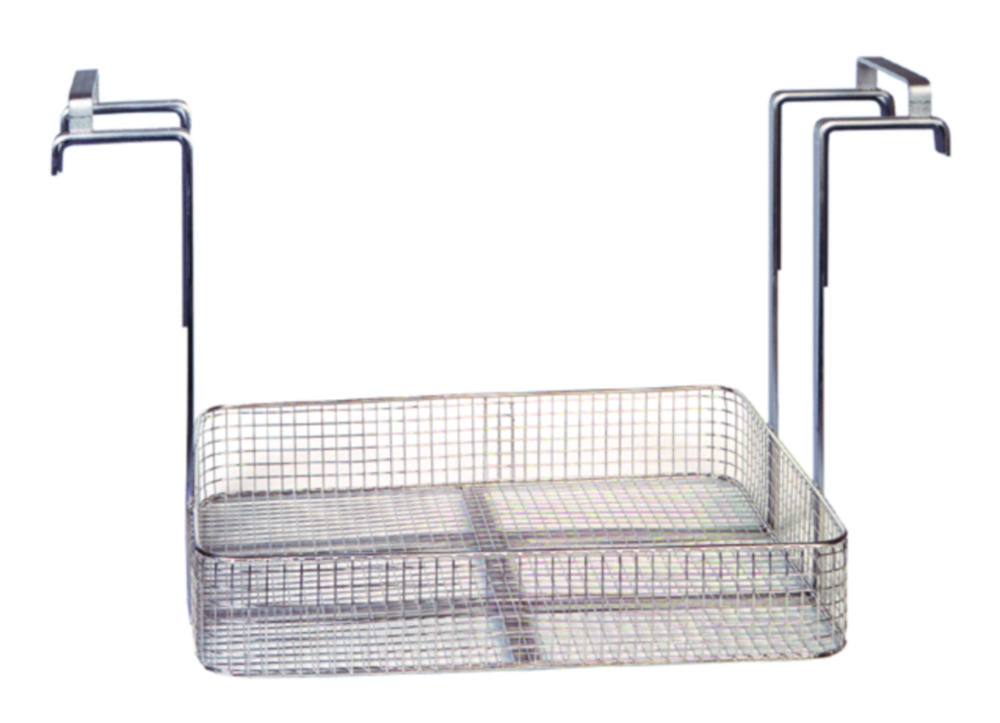
Accessories for Sonorex Technik ultrasonic baths
Description:
Lid
|
For bath type:
RM 16 UH
|
Type:
MD 16
Stainless steel. Insert baskets and lids for Technik models. Lids protect against evaporation and reduce operating noise.Baskets for hanging in bath tanks as outlined below.
€107.00*
Bandelin electronic
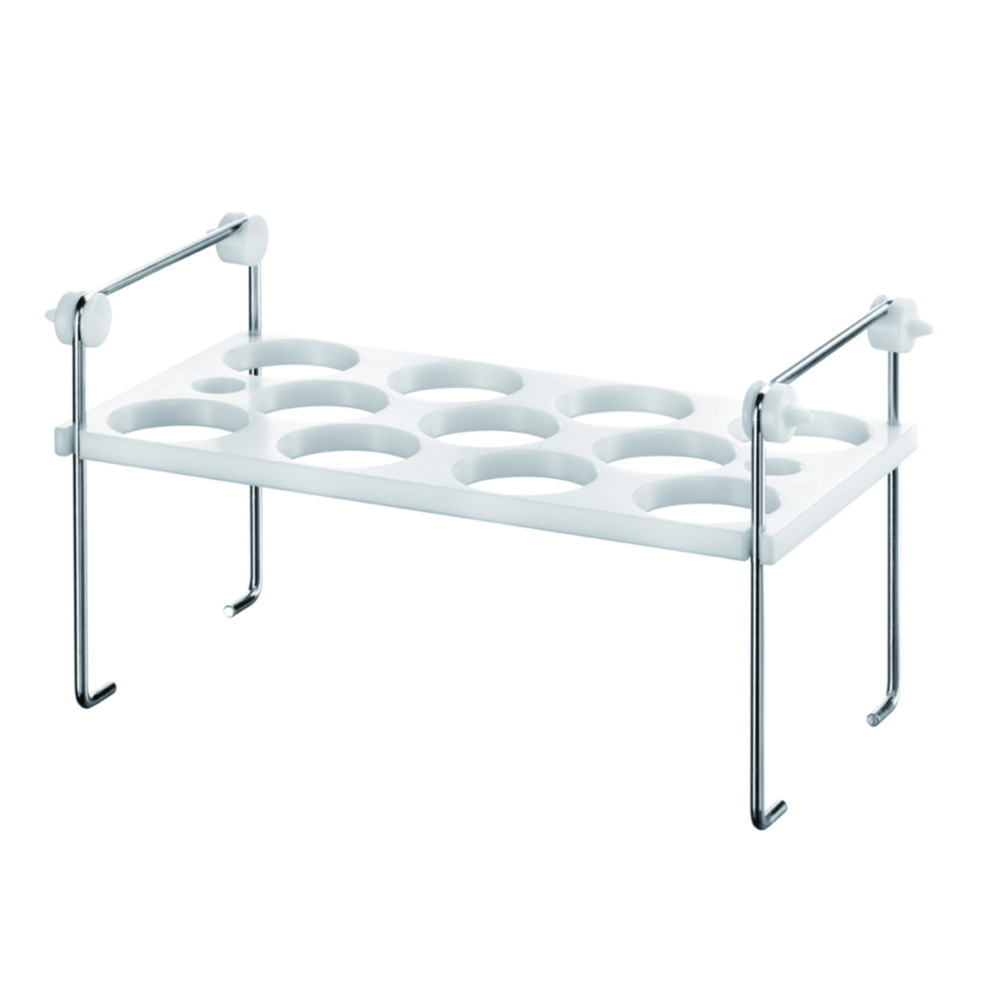
Accessories for ultrasonic device SONOCOOL® 255
Description:
Sample holder for 11 beakers SD 01.2
|
Type:
PH 255-11
€194.00*

Elma Schmidbauer GmbH
Basket insert for ultrasonic baths Elmasonic, stainless steel
Description:
Basket insert, max load: 6 kg
Suitable for baskets 100 high, 100/120 medium and flat.
€67.00*

Elma Schmidbauer GmbH
Universal Cleaning Concentrates elma clean 10
Capacity l:
5
Alkaline Universal Cleaner suitable for the thorough ultrasonic cleaning of medical and dental instruments and laboratory equipment made of glass, steel, plastics, ceramics. Cleans also crowns, stainless-steel dental impression trays. Removes blood, saliva, protein- and bone residuals, fats, oils, grinding and polishing pastes. Not suitable for aluminum, zinc or light metal alloys and for plastics that are susceptible for stress cracking (e.g. ABS or PC).Application concentration:5 % in water at 50 ... 80° CPhysico-chemical data:Density:1.05 g/mlpH (concentrate):12 ... 12.5Ingredients:5% non-ionic surfactants, 5% phosphatesHazardous Substance DataGHSSignal wordGefahrH-SatzH290, H315, H318, H402P-SatzP280, P301+P330+P331, P302+P352, P305+P351+P338, P310, P312UNNR1824
€20.33*

Elma Schmidbauer GmbH
Concentrate for ultrasonic baths elma clean 305
Capacity kg:
25
Alkaline cleaning concentrate for the cleaning of organic and inorganic alkali-proof spectacles, moulds and high precision optics, gemstones, quartz, ceramics and selected plastics. Also for steel, iron steel and titanium surfaces. For the removal of resin, putty/glue, adhesives and traces of selected organic plastics from moulds (e.g. CR 39). Check plastics for compatibility before use. Do not use for light metal (Al, Mg), zinc and tin surfaces.Application concentration:10 .. 50 % in water, 60 ... 85 ° CPhysico-chemical data:Density:1.07 g/mlpH (1 % solution):12Ingredients:5 % amphoteric surfactants, 5 % phosphatesHazardous Substance DataGHSSignal wordGefahrH-SatzH290, H314, H318, H303, H401P-SatzP102, P234, P280, P301+P310, P301+P330+P331, P302+P352, P305+P351+P338, P310, P338, P332+P313, P405UNNR1814
€371.00*

Elma Schmidbauer GmbH
Concentrate for Ultrasonic baths elma clean 70
Capacity l:
1
Alkaline universal cleaning concentrate for laboratory instruments and work pieces made of glass, alkaline-resistant plastics, ceramics, rubber (excellent for breathing masks), metals, non-ferrous metals, also light metals. It removes contaminations such as oils, fats and greases, dust, soot, cokings, etc. Application concentration
Ultrasonic bath:
Immersion bath:1 ... 5 % in water, 20 ... 80 °C
5 ... 10 %Physico-chemical data:Density:1.132 g/mlpH (concentrate):~13Ingredients:5 ... 15 % anionic surfactants, 5% amphoteric surfactants, 5 ... 15 % phosphatesHazardous Substance DataGHSSignal wordGefahrH-SatzH315, H318P-SatzP280, P301+P310, P301+P330+P331, P302+P352, P305+P351+P338, P332+P313, P317+P313SDSLink
€19.26*

Elma Schmidbauer GmbH
Concentrate for ultrasonic baths elma clean 75
Capacity l:
1
Alkaline cleaning concentrate with ammonia for laboratory and workshop. For removing dirt particles, oil and greases, skin residues, grinding, polishing and lapping residues. Cleans ceramics and glassware as well as instruments/tools. Brightens precious and non-ferrous metals. Zinc, aluminium and light metal alloys may be attacked.Application concentration:Ultrasonic bath:5 ... 10 %, 20 ... 50 °CSoaking bath:10 ... 15 %, 20 ... 50 °CPhysico-chemical data:Density:0.99 ... 1.00 g/mlpH (concentrate):10.5 ... 11Ingredients:5 ... 15 % anionic surfactants, 5 ... 15 % non-ionic surfactants, 5 ... 15 % ammoniumsoapHazardous Substance DataGHSSignal wordGefahrH-SatzH315, H318, H336, H412P-SatzP233, P271, P280, P301+P330+P331, P302+P352, P305+P351+P338, P310, P312SDSLink
€22.00*

Elma Schmidbauer GmbH
Concentrate for ultrasonic baths elma lab clean A25
Capacity l:
10
Strongly alkaline, foam-inhibited cleaning concentrate for ultrasonic, immersion and splash cleaning of alkali-resistant parts and laboratory instruments, made of metal (including titanium), glass, ceramic and plastic. Removes biological contaminants, grease, oil, abrasives and polishing pastes, resinified and tarry residues, marker and label residues.Not suitable for aluminium, magnesium, alloys of light metals and alkali-sensitive glass. Risk of tarnishing when used for nonferrous metals.Application concentration:Physico-chemical data:Density:~1.14 g/mlpH (1 % solution):12 ... 12.5Ingredients:5 ... 15 % amphoteric surfactants, 5 ... 15 % non-ionic surfactants, 5 % phosphates, 5 % polycarboxylatesUltrasonic bath:1 ... 2 vol-%, 50 ... 75 °CSplash cleaning:0.5 ... 1 vol-%, 55 °CImmersion bath:~4 vol-%Hazardous Substance DataGHSSignal wordGefahrH-SatzH290, H314, H318P-SatzP102, P234, P260, P280, P301+P310, P301+P330+P331, P303+P361+P353, P305+P351+P338, P310, P332+P313, P405UNNR1814SDSLink
€27.00*

Elma Schmidbauer GmbH
Concentrate for ultrasonic baths elma lab clean N10
Capacity l:
10
Neutral, foam-inhibited cleaning concentrate for ultrasonic, immersion and splash cleaning of sensitive parts and laboratory instruments made of metal (incl. aluminium and light metal alloys), glass, ceramic and plastic. Removes gentle emulsions, marking and label residues, lime soap deposits, light greases and oils.Check magnesium alloys before application.Application concentration:Physico-chemical data:Density:~1.059 g/mlpH (concentrate):~7.1Ingredients:5 ... 15 % anionic surfactants, 5 ... 15 % non-ionic surfactants, 5 % phosphates, 5 % polycarboxylatesUltrasonic bath:~2 vol-%, 30 ... 75 °CSplash cleaning:~1 vol-%, 55 °CImmersion bath:~4 vol-%Hazardous Substance DataGHSSignal wordAchtungH-SatzH319P-SatzP261, P280, P301+P312, P305+P351+P338, P337+P313SDSLink
€25.30*

Elma Schmidbauer GmbH
Concentrate for ultrasonic baths elma lab clean S20
Capacity l:
10
Acidic, foam-inhibited cleaning concentrate for ultrasonic, immersion and splash cleaning of acid-resistant medical and laboratory instruments made of stainless steel, glass, ceramic and plastic. Removes mineral contamination like lime scales, lime soaps, metal oxides and flux residues after soldering, mineral oils and greases.Not suitable for aluminium, magnesium and light metal alloys. Check acid-sensitive glassy materials before application.Application concentration:Physico-chemical data:Density:1.32 g/mlpH (concentrate):1Ingredients:15 ... 30 % non-ionic surfactants, 30 % phosphates (phosphoric acid)Ultrasonic bath:~1 ... 2 vol-%, 50 ... 75 °CSplash cleaning:~0.5 vol-%, 55 °CImmersion bath:2 vol-%Hazardous Substance DataGHSSignal wordGefahrH-SatzH290, H302, H314, H313+H333, H401P-SatzP260, P280, P301+P330+P331, P302+P352, P305+P351+P338, P308, P310SDSLink
€36.30*
Bandelin electronic
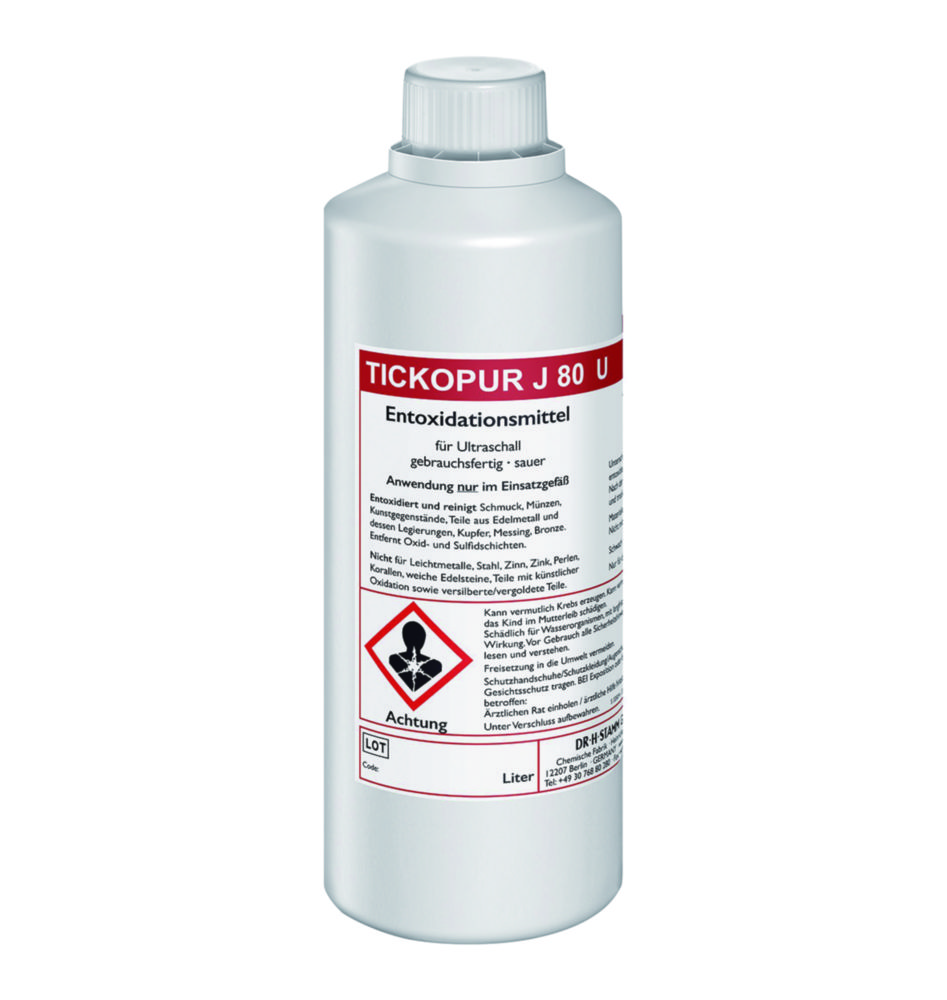
Concentrates for ultrasonic baths TICKOPUR J 80 U
Capacity l:
1
Concentrates for SONOREX ultrasonic cleaning baths. Enhances cavitation, cleans intensively, kind to most materials and free from chloride. For use cold or warmed up.Deoxidiser, ready-to-use. Properties: weakly acidic, pH 1.5. Only for use in the application vessel. For: precious metals and their alloys, copper, bronze, brass. Not for light metals, steel, tin, zinc.Hazardous Substance DataGHSSignal wordAchtungH-SatzH351, H361d, H412P-SatzP202, P273, P280, P308+P313, P405
€19.00*
Bandelin electronic
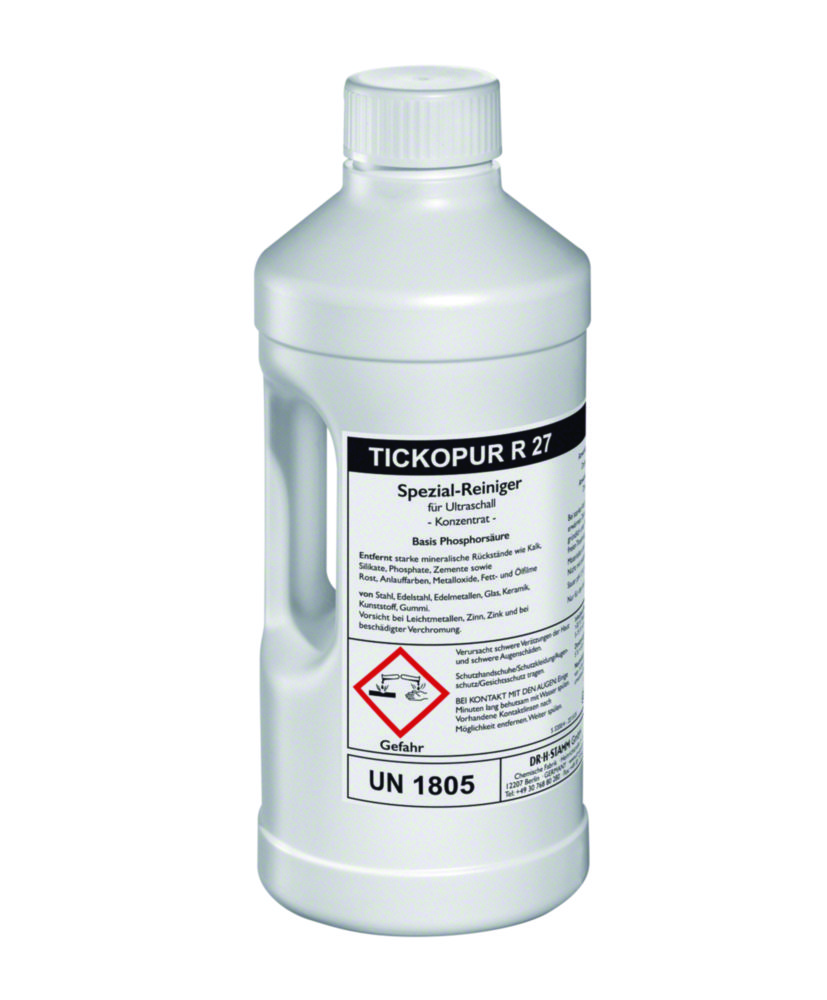
Concentrates for ultrasonic baths TICKOPUR R 27
Capacity l:
1
Concentrates for SONOREX ultrasonic cleaning baths. Enhances cavitation, cleans intensively, kind to most materials and free from chloride. For use cold or warmed up.Special cleaner, concentrate. Properties: acid pH 1.9 at 1% solution, dosage 5%. Based on: phosphoric acid. For: steel, stainless steel, precious metal, glass, ceramic rubber, plastic. Removes: rust, lime scale, mineral residues, silicate, phosphate, cement etc.Transport regulations for dangerous goods have to be observed.Hazardous Substance DataGHSSignal wordGefahrH-SatzH314P-SatzP280, P305+P351+P338UNNR1805SDSLink
€47.00*
Bandelin electronic
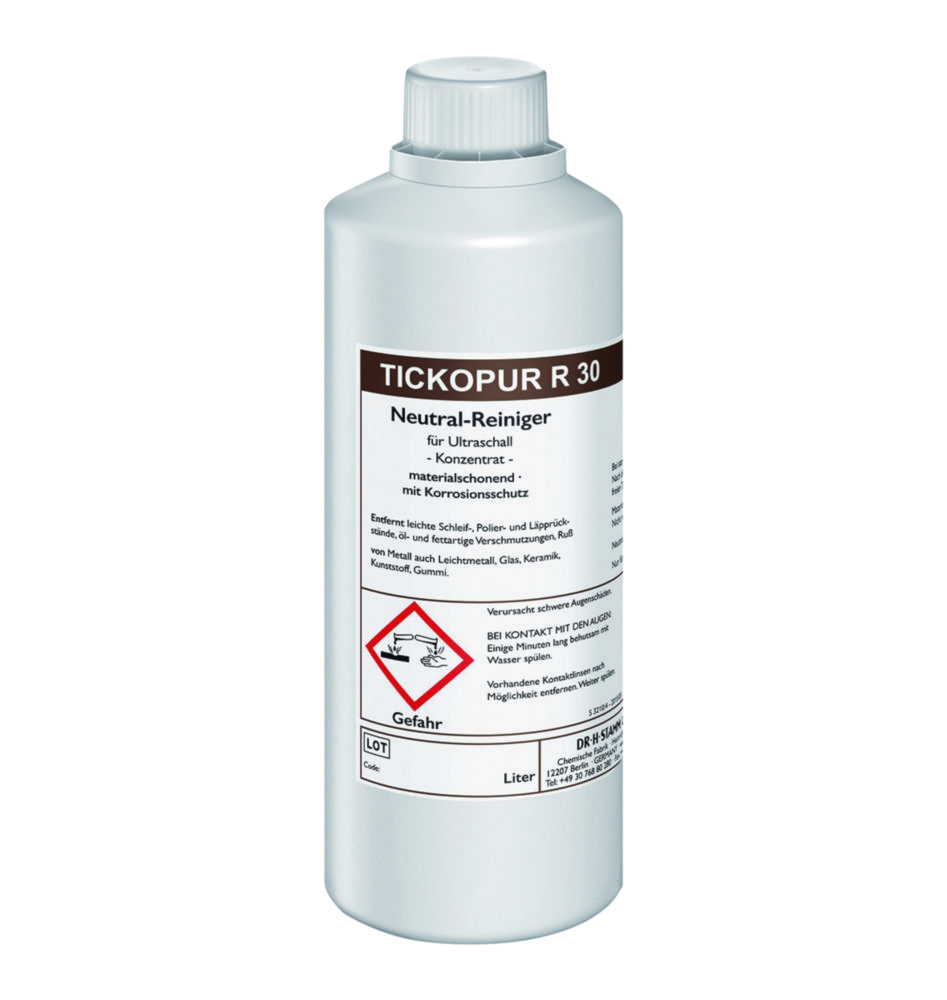
Concentrates for ultrasonic baths TICKOPUR R 30
Capacity l:
1
Concentrates for SONOREX ultrasonic cleaning baths. Enhances cavitation, cleans intensively, kind to most materials and free from chloride. For use cold or warmed up.Neutral cleaner, concentrate. Properties: neutral, pH 7 dosage 1 to 5%. Based on: surfactants. For: metal, light metal, glass, ceramics, plastic, rubber. Against: drilling, grinding, polishing and lapping residues,oily and greasy soiling and soot.Hazardous Substance DataGHSSignal wordGefahrH-SatzH318P-SatzP305+P351+P338SDSLink
€25.00*

Bandelin electronic
Concentrates for ultrasonic baths TICKOPUR R 33
Capacity l:
200
Concentrates for SONOREX ultrasonic cleaning baths. Enhances cavitation, cleans intensively, kind to most materials and free from chloride. For use cold or warmed up.Universal cleaner, concentrate. Properties: mildly alkaline pH 9.9 at 1%, dosage 3 to 5%. For: metal, light metals, glass, ceramics, plastic, rubber, e-filters, respirators. Against: grinding, polishing and lapping residues, oily and greasy soiling, waxes, silicone films, ink.Hazardous Substance DataGHSSignal wordGefahrH-SatzH315, H318P-SatzP280, P305+P351+P338
€25.00*
Bandelin electronic
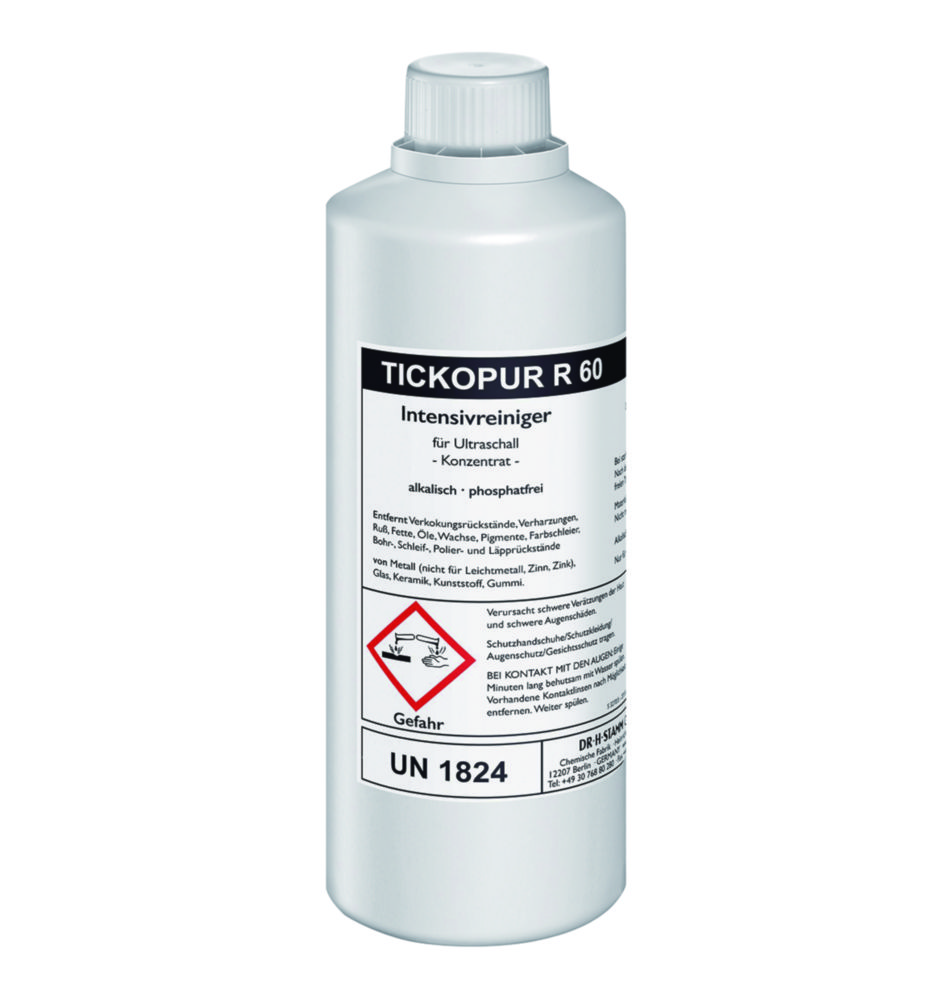
Concentrates for ultrasonic baths TICKOPUR R 60
Capacity l:
2
Concentrates for SONOREX ultrasonic cleaning baths. Enhances cavitation, cleans intensively, kind to most materials and free from chloride. For use cold or warmed up.Intensive cleaner, concentrate. Properties: alkaline, pH 12.3 at 1 %, dosage 2 to 20 %. Based on: surfactants, phosphate-free, silicate-free. For: coke residues, resinous residues, soot, pigments, grease, oils, waxes, silicon oils, coloured fog, drilling, grinding, polishing and lapping residues. Not for light metals, tin, zinc.Hazardous Substance DataGHSSignal wordGefahrH-SatzH314P-SatzP280, P305+P351+P338UNNR1824SDSLink
€19.00*

Bandelin electronic
Concentrates for ultrasonic baths TICKOPUR RW 77
Capacity l:
1
Concentrates for SONOREX ultrasonic cleaning baths. Enhances cavitation, cleans intensively, kind to most materials and free from chloride. For use cold or warmed up.Special cleaner with ammonia, concentrate. Properties: mildly alkaline, pH 9.9 at 1%, dosage 5%. Based on: surfactants, ammonia. For: metal, glass, ceramics, plastic, rubber, boards, watches, test sieves. Beware of light metals. Against: resin, soot, pigments, polishing and lapping residues, greases, oils, waxes, stains, flux.Hazardous Substance DataGHSSignal wordGefahrH-SatzH315, H318P-SatzP280, P305+P351+P338SDSLink
€27.00*
Bandelin electronic
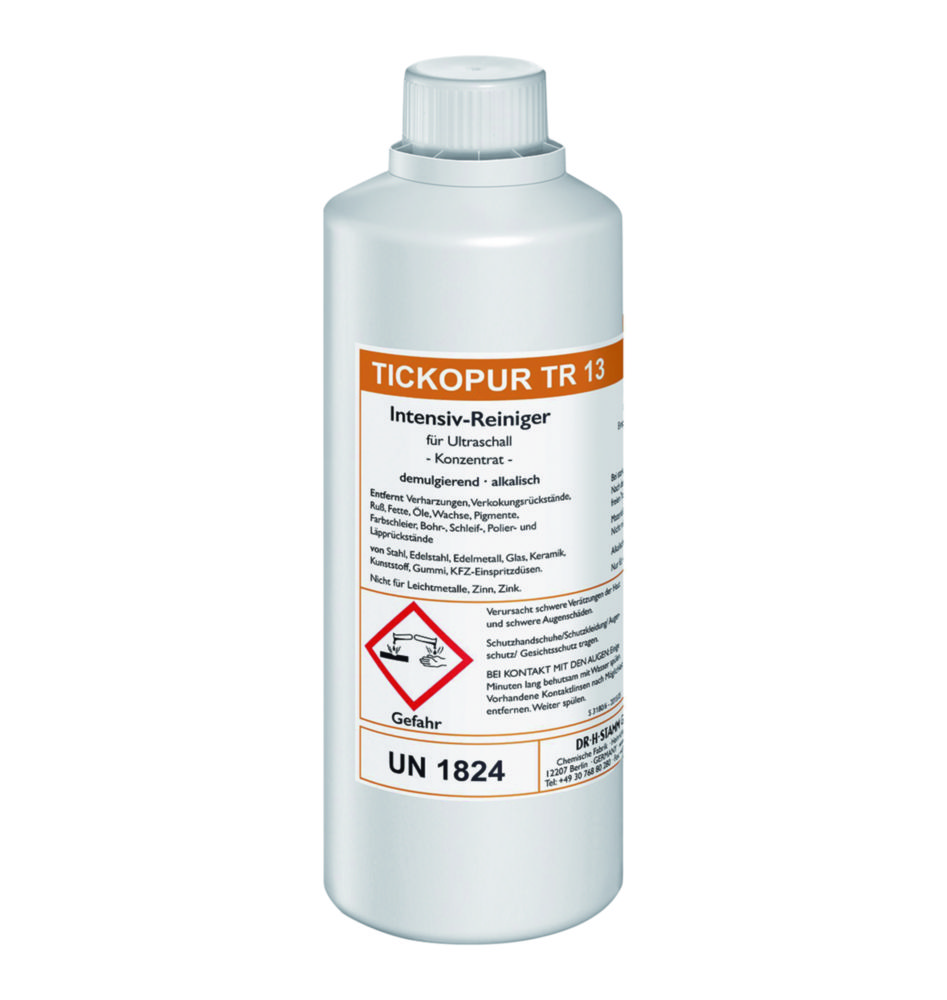
Concentrates for ultrasonic baths TICKOPUR TR 13
Capacity l:
2
Concentrates for SONOREX ultrasonic cleaning baths. Enhances cavitation, cleans intensively, kind to most materials and free from chloride. For use cold or warmed up.Intensive cleaner, concentrate. Properties: alkaline pH 11.9 at 1 %, dosage 0.1 to 10 %. Based on: surfactants, alkalis. For: steel, stainless steel, precious metals, glass, ceramics, plastics, rubber. Not for: light metals, tin and zinc. Against: Resins, coking residues, soot, greases, oils, waxes, pigments, colour fog, grinding, polishing and lapping residues.Transport regulations for dangerous goods have to be observed.Hazardous Substance DataGHSSignal wordGefahrH-SatzH314P-SatzP280, P305+P351+P338UNNR1824SDSLink
€31.00*
Bandelin electronic
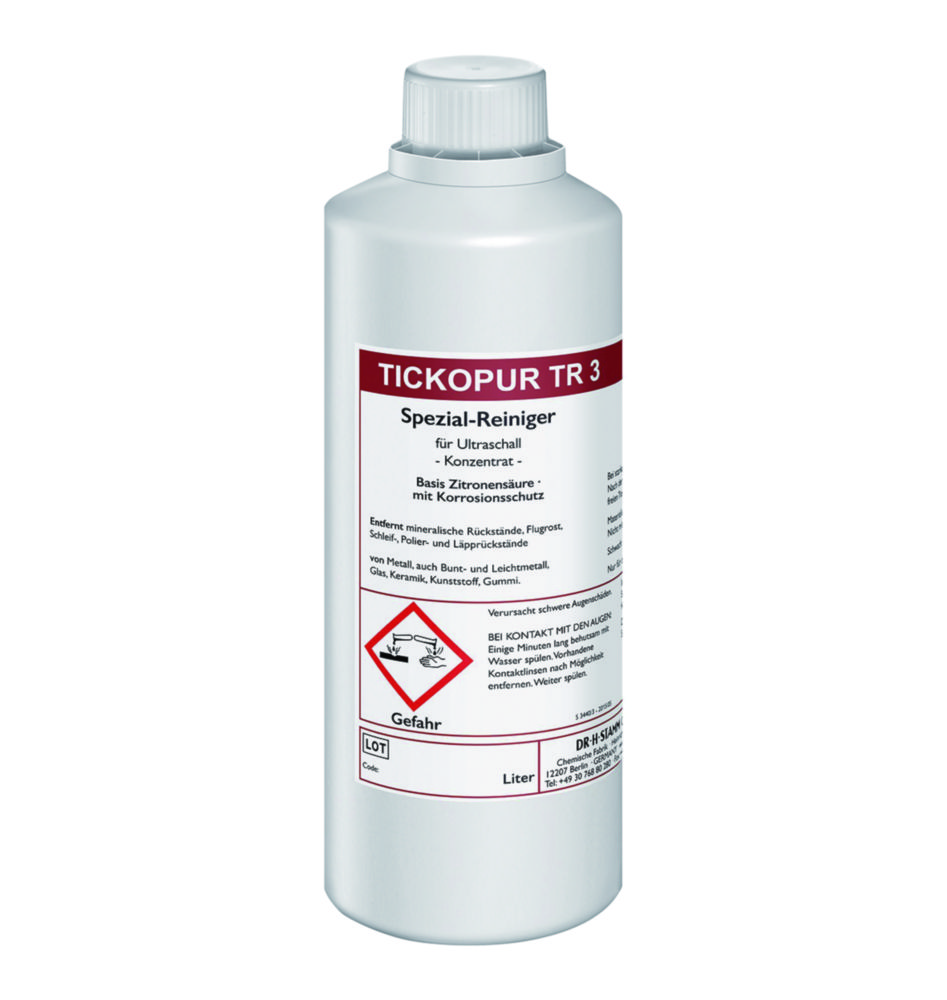
Concentrates for ultrasonic baths TICKOPUR TR 3
Capacity l:
2
Concentrates for SONOREX ultrasonic cleaning baths. Enhances cavitation, cleans intensively, kind to most materials and free from chloride. For use cold or warmed up.Special cleaner, concentrate. Properties: weak acid pH 3.0 at 1%, dosage 5%. Based on: citric acid, surfactants, without phosphate. For: steel, stainless steel, non-ferrous, precious and light metals, glass, ceramics, plastics, rubber. Removes: mineral residues, flash rust, grease, oils, waxes, pigments, grinding, polishing and lapping residues.Hazardous Substance DataGHSSignal wordGefahrH-SatzH318P-SatzP280, P305+P351+P338SDSLink
€24.00*

Bandelin electronic
Concentrates for ultrasonic baths TICKOPUR TR 7
Capacity l:
2
Concentrates for SONOREX ultrasonic cleaning baths. Enhances cavitation, cleans intensively, kind to most materials and free from chloride. For use cold or warmed up.Universal cleaner, concentrate. Properties: demulsifying, mildly alkaline, pH 8.9 at 1 %, dosage 0.1 to 5 %. Basis: surfactants. For: Metal, glass, ceramics, rubber, plastic. Against: Greases, oils, waxes, pigments, solder pastes, drilling, grinding, polishing and lapping residues.Transport regulations for dangerous goods must be observed.Hazardous Substance DataGHSSignal wordGefahrH-SatzH318P-SatzP280, P305+P351+P338SDSLink
€25.00*
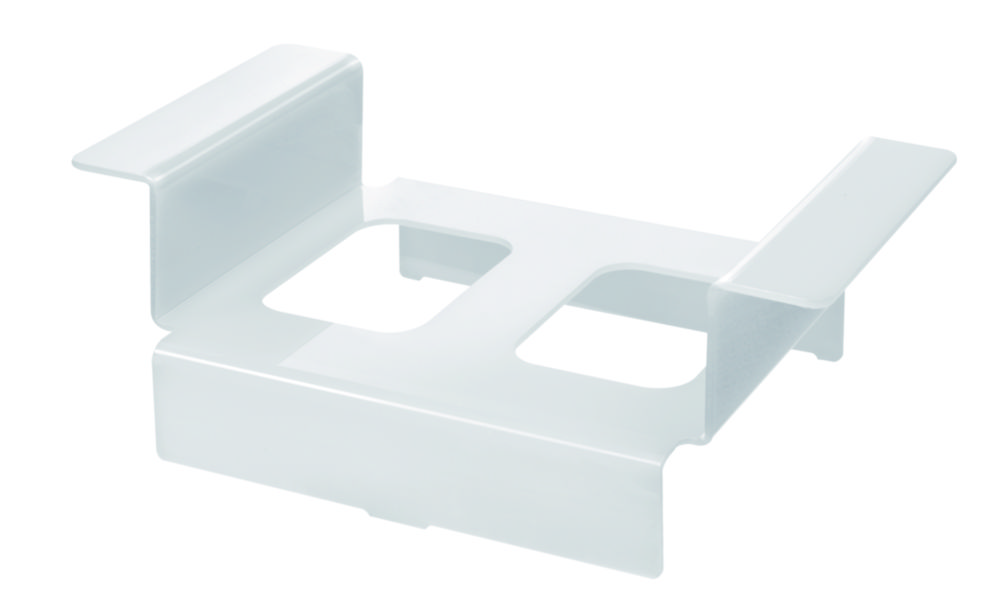

Elma Schmidbauer GmbH
Double insert basket for ultrasonic baths Elmasonic, stainless steel
Depth int.:
240 mm
|
For:
Easy 180/Select 180/S 180/P 180
|
Height int.:
50 mm
|
Int. width:
270 mm
|
Internal dimensions (WxDxH):
270 x 240 x 50 mm
|
Load max. kg:
8
|
Material:
Stainless steel 1.4301
Upper basket inner dimensions (WxDxH): 265x235x50 mm
€405.00*
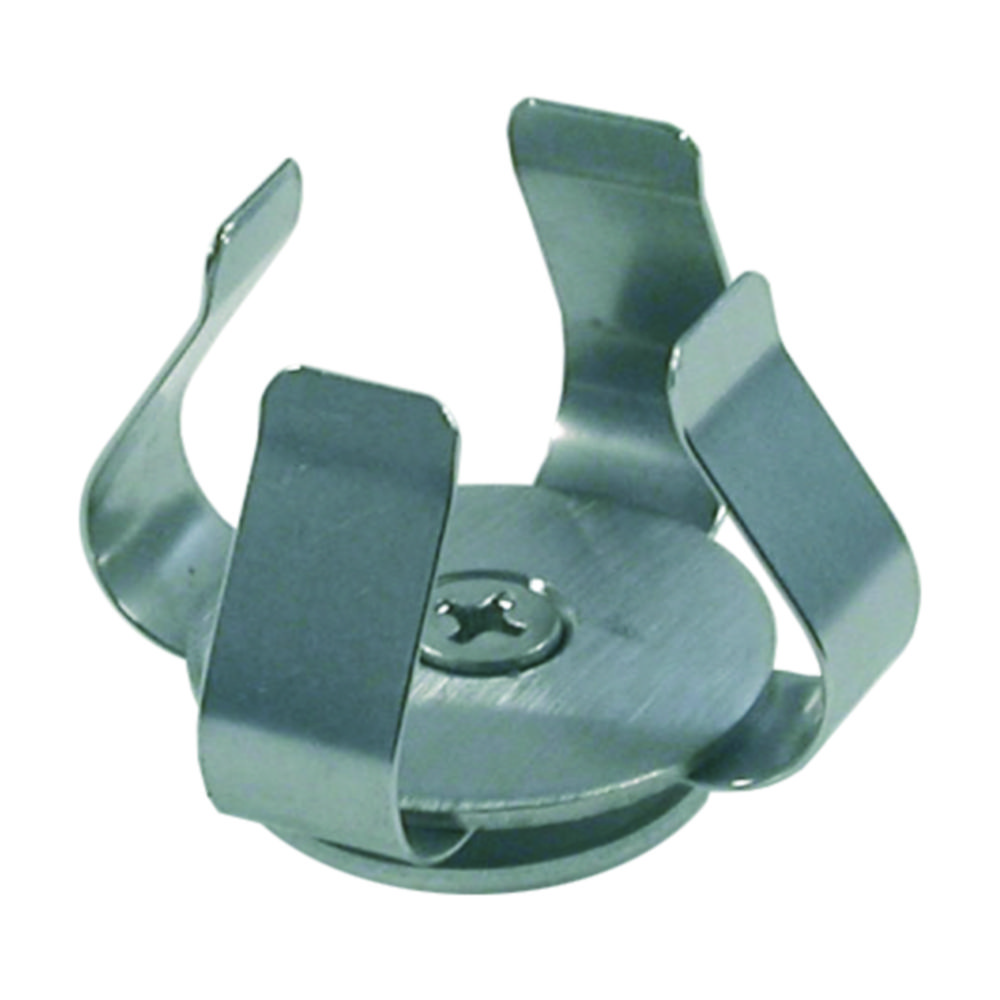
Bandelin electronic
Flask Clips for Sonorex insert baskets
Type:
EK 10 for insert baskets up to 31 mm dia.
Stainless steel. Suitable for insert baskets and instrument holders with mesh size up to 12.5mm x 12.5mm and for glass holder GL for DT...F. Essential for the attachment of laboratory flasks.
€39.60*
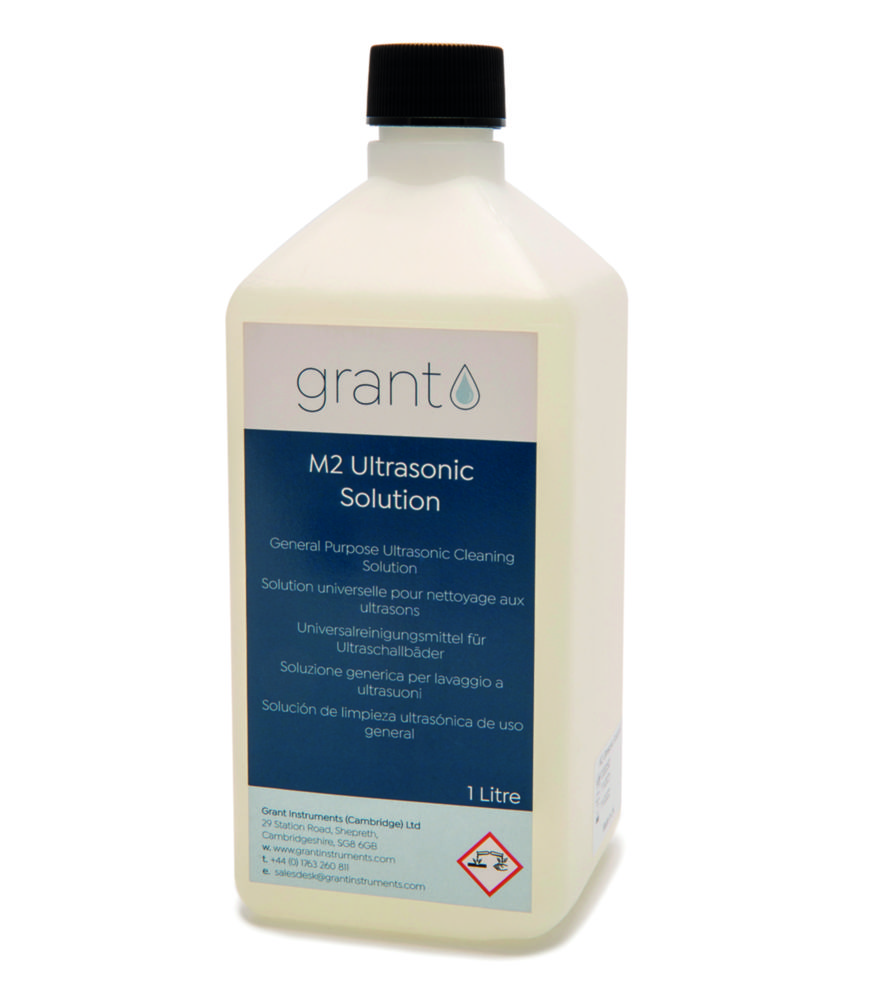
Grant Instruments Ltd.
General purpose detergent for Ultrasonic baths XUB / XUBA
Capacity l:
1
|
Type:
M2
Hazardous Substance DataGHSSignal wordGefahrH-SatzH315, H318, H412P-SatzP280, P302+P352, P305+P351+P338, P310, P273, P362+P364SDSLink
€196.10*
Promotion

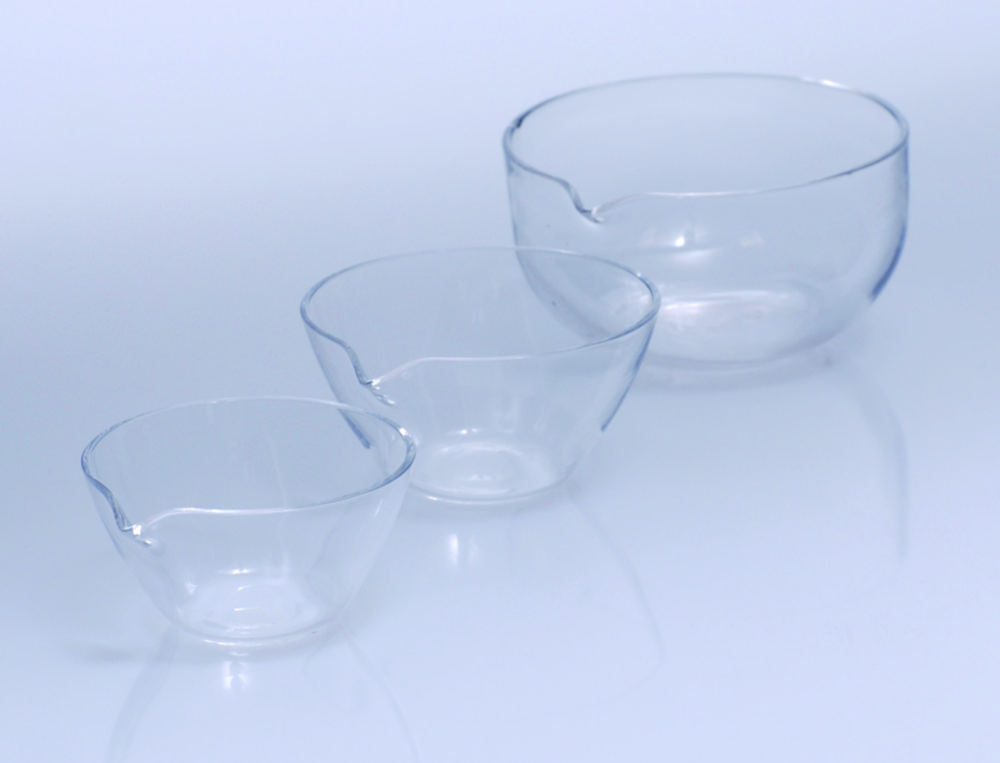
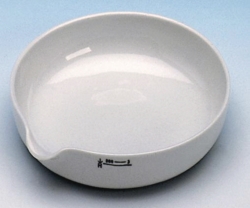
Evaporating basins, porcelain, shallow form
Glazed inside and outside except for rim.*According to DIN standard
€12.32*
Promotion
Evaporating basins, porcelain, shallow form
Glazed inside and outside except for rim.*According to DIN standard
€12.32*