 Quick delivery

42%

LLG Labware
Mini centrifuges LLG-uniCFUGE 2 and LLG-uniCFUGE 2/5
Description:
LLG-uniCFUGE 2 with universal rotor
|
Manufacturer Article Number:
6263510
|
Plug type:
EU
Compact and reasonably priced mini centrifuges with two rotor types. Speed can be adjusted to 4000 rpm or 6000 rpm. Powerful motor for fast starting. Quick stop when the lid is opened.LLG-uniCFUGE 2 with Universal rotor for 6 x 1.5/2.0 ml and 6 x 0.5 ml tubes and 2 times 8 x 0.2 ml PCR-stripes.LLG-uniCFUGE 2/5 wth rotor for 4 x 5 ml tubes.Scope of supply: Centrifuge, mains cableSpecificationsMax. RCF:
Max. speed:
Motor:1200 x g and 2000 x g
4000 rpm and 6000 rpm
brushless DC motorMax. load:6 x 0.5/1.5/2 ml and 2 x 8-tube PCR strips (0.2 ml) or 4 x 5 ml tubesDimensions (diam. x H):140 x 120 mmWeight:0.7 kgPower supply:100 ... 240 V, 50/60 HzWarranty:3 years
€9.57*
€232.40*
(41.91% saved)

LLG Labware
LLG-Microcentrifuge tubes, PP
Autoclavable:
Yes
|
Bottom shape (Cryo tubes, Tubes, Reaction vessels):
Conical
|
Colour:
Clear
|
Dual Use:
0
|
Manufacturer Article Number:
6521309
|
Material:
PP
|
Nominal capacity:
1.5 ml
|
Pyrogen free:
Yes
|
RNase/DNase-free:
Yes
|
Sterile:
No
|
UNSPSC:
41121703
|
With graduation:
Yes
LLG Microtubes cover standard volumes for a variety of sample tests. They are available in 0.5 ml, 1.5 ml and 2.0 ml volumes. These standard Microtubes withstand high centrifugal forces, are temperature and chemically-resistant and guaranteed leak-free. An innovative and modern new generation of Microtubes with new features. Perfect sealing qualities, excellent chemical stability and optimal construction materials guarantee even better resistance to centrifugal and chemical forces. Easy to open and to close thanks to the improved lid geometry. For visual volume control the 1.5 ml tubes are equipped with graduations at 0.5 ml, 1.0 ml and 1.5 ml. The 2.0 ml tubes have graduations at 0.5 ml, 1.0 ml, 1.5 ml and 2.0 ml. The 0.5 ml tubes have no graduations.Certified DNase-, RNase- and pyrogen-free.Clear, in bags. Suitable for microbiology. Guaranteed metal-free.SpecificationsAutoclavabilityTemperature:121 °CPressure:1.05 bar or 15 psiTime:20 min or lessCentrifugationFixed angle rotor:25000 x gSwing out rotor:70000 x g
€12.77*
27%

Ohaus GmbH
Microcentrifuge Frontier™ FC5513
Depth:
356 mm
|
Dimensions (WxDxH):
277 x 356 x 236 mm
|
Dual Use:
0
|
Height:
236 mm
|
Manufacturer Article Number:
30370691
|
Max. rcf:
17317 x g
|
Max. speed:
13500 1/min
|
Max. voltage:
230 V
|
Min. speed:
200 1/min
|
Noise level:
60 db(A)
|
Power supply:
230 V, 50/60 Hz
|
Power supply frequency:
50/60 Hz
|
Rated capacity:
170 W
|
Speed:
200 ... 13500 1/min
|
Type:
FC5513-K
|
Weight:
13.1 kg
|
Width:
277 mm
|
With timer:
Yes
Kompakte Hochgeschwindigkeits-Mikrozentrifuge mit modernem Touch-Wheel für komfortable Parameteranpassungen und reduziertem Verschleiß. Bestens geeignet für allgemeine Laboranwendungen.Zweizeilige LCD-Anzeige mit HintergrundbeleuchtungLeistungsstarker, bürstenloser Induktionsmotor10 Beschleunigungs- und VerzögerungsratenSpeicher für bis zu 99 gängige ParameterDeckelverriegelungUnwuchtsensorGeringer PlatzbedarfTimer: 10 s bis 99 h 59 min 59 s, DauerbetriebKompakte Hochgeschwindigkeits-Mikrozentrifuge mit modernem Touch-Wheel für komfortable Parameteranpassungen und reduziertem Verschleiß. Bestens geeignet für allgemeine Laboranwendungen.Zweizeilige LCD-Anzeige mit HintergrundbeleuchtungLeistungsstarker, bürstenloser Induktionsmotor10 Beschleunigungs- und VerzögerungsratenSpeicher für bis zu 99 gängige ParameterDeckelverriegelungUnwuchtsensorGeringer PlatzbedarfTimer: 10 s bis 99 h 59 min 59 s, Dauerbetrieb
€1,169.00*
€1,580.00*
(26.01% saved)
20%

IKA-Werke GmbH & Co.KG
Midi centrifuge G-L
Manufacturer Article Number:
0030000774
|
Plug type:
EU
|
Type:
G-L
Due to the material separation at medium speeds, this midi centrifuge is ideal for all types of separation processes, such as in molecular biology. It can be used with standard 1.5 / 2 ml tubes as well as with PCR strips. The cover opens automatically at the press of a button.High-performance motorWith metal coverStarts only when the cover is firmly closedDirect and easy setting of speed, rotational speed and programmes via membrane keypadScope of delivery: Midi centrifuge inkl. metal rotor and cover for 12 vessels, with a capacity of 1.5/2 mlSpecificationsMax. RCF:16500 x gMax. speed:15700 min-1Max. capacity:12 x 1.5 / 2.0 mlPower consumption:65 WDimensions (W x D x H):200 x 280 x 140 mmWeight:3.9 kgPower supply:220 ... 230 V, 50 ... 60 HzProtection class:IP 20
€881.60*
€1,102.00*
(20% saved)
16%

LLG Labware
Mini centrifuge LLG-uniCFUGE 5 with timer and digital display
Dual Use:
0
|
Manufacturer Article Number:
6263530
|
Plug type:
EU
|
Type:
LLG-uniCFUGE 5
Fixed angle rotor with lid, made of aluminium for 12 x 1.5/2 ml tubes with optimised aerodynamics which minimize heat and noise during operation. Operation in RPM or RCF mode possible by simple switching. Short-Spin mode with selectable RZB and RPM values. Large LCD (3.9") display with intuitive interface. Integrated imbalance-detection with automatic shutdown. Wide suction feet provide a stable base. The centrifuge can be controlled via computer by using the included software that can store up to 99 user-defined programmes. Operational record output to Excel.The following types of vessel can be used:12 x 0.2 ml PCR tubes12 x 0.5 ml centrifuge tubes12 x 1.5 ml centrifuge tubes12 x 2.0 ml centrifuge tubesScope of supply: Centrifuge with rotor for 12 x 1.5/2 ml tubes, power supply with USB cable, 12 Adapters for 0.5 ml tubes, 12 Adapters for 0.2 ml tubes, Allen wrench with T handle, Software CDOptional:Rotor for 16 x 0.2 ml tubes or 2 x 8 PCR-stripes (Cat. No. 6.263 535)SpecificationsMax. RCF:15595 x gMax. speed:variable from 500 ... 15000 rpmMotor:brushless DC motorMax. load:12 x 2 ml PCR tubesTimer:0 ... 999 minDimensions (W x D x H):262 x 230 x 131 mmWeight:4 kgPower supply:100 ... 240 V, 50/60 HzWarranty:3 years
€604.20*
€712.50*
(15.2% saved)
15%

Heathrow Scientific LLC
Mini-Centrifuge Sprout®/ Sprout® plus
Colour:
green
|
Dimensions (W x D x H) mm:
128 x 153 x 109
|
Dual Use:
0
|
Manufacturer Article Number:
HS120610
|
Type:
Sprout®plus
New SnapSpin™ rotors - a new approach to compact centrifuge use!Introducing the next generation of the Sprout® mini-centrifuge loaded with new features for increased efficiency in the lab. Two new SnapSpin rotors (a six-place standard rotor and an eight-place strip rotor) snap-in and out for fast and easy changes! Plus, two sets of adapters accommodate all major microtube and PCR® tube styles (2.0, 1.5, 0.5, 0.2 mL) for customized use. The Sprout is ideal for microfilter cell separations and HPLC samples. With most spins lasting around 20 seconds, the ergonomically designed lid is specifically designed to fit in the palm of your hand for easy repeat opening and use. Made with UV resistant plastic.Operation is now faster and easier: Snap in rotor, load and close. For repeated spins, simply close the lid to reactivate. An internal safety switch ensures the Sprout will not operate without the lid open.Small size offers minimal benchtop space and removable cord for compact storage.Low noise and vibrationSmall sizeQuick Spin feature for short spinsNumbered tube positionsUnit will not operate without lid in placePower Adapter with power cords for worldwide usageSprout® plus additionally with:Locking lid for added protection when the unit is in useLarger lid to accommodate longer and skirted tubes and taller tube lidsScope of delivery:Two easy change, tool-free rotors. 1. Circular, one-size rotor for six 1.5- and 2.0ml tubes or use with adapters to spin six 0.5ml tubes. 2. Strip rotor for two 8 x 0.2ml PCR tube strips or 16 x individual 0.2ml PCR tubes. Six 0.2 mL and six 0.5 mL adapters for customized useStorage Case, PP - Keeps rotors and adapters contained and dust-freeTube Rack, PP - Convenient for handling samples before and after quick spins. For 16 x 2.0 / 1.5ml micro centrifuge tubes (diam. 12mm)4 replacement lid o-ringsSpecificationsMax. RCF:2000xgMax. speed:6000rpmMax. capacity:6 x 1.5/2.0ml tubes or 2 x 8-strips PCRPower consumption:7.3WDimensions (W x D x H):128 x 153 x 104 mmWeight:1.45kgPower supply:100-240VAC, 50/60Hz, 0.6AWarranty:5 years
€223.55*
€263.00*
(15% saved)
15%

Eppendorf SE
Microcentrifuge 5425 R (General Lab Product)
Description:
with control knobs, cooled, with rotor FA-24x2
|
Dual Use:
0
|
Manufacturer Article Number:
5406000518
|
Type:
5425 R
Cooled Centrifuge 5425 R for temperature-sensitive samples with a volume of up to 5 ml.Fast acceleration and deceleration (10 acceleration and braking ramps)Lower noise level (< 54 dB)Small footprintLow loading height for comfortable inserting rotor and samplesSoft touch one-finger closure for ergonomic operationAutomatic lid opening after runningThis centrifuge is a General Lab Product for research purposes.SpecificationsTemperature range:-10 ... 40 °CMax. RCF:21330 x gMax. capacity:10 x 5,0 mlTimer:10 s ... 9:59 h, continuous runPower consumption:360 WDimensions (W x D x H):290 x 480 x 260 mmWeight:21.0 kgPower supply:230 V, 50/60 Hz
€4,946.15*
€5,819.00*
(15% saved)
15%

Eppendorf SE
Minicentrifuges MiniSpin® and MiniSpin® plus (IVD)
Dual Use:
0
|
Manufacturer Article Number:
5452000018
|
Type:
MiniSpin®(IVD)
The powerful and user-friendly MiniSpin® and MiniSpin® plus microcentrifuges are extremely compact and have a small footprint. Depending on your needs, you can choose between two models. MiniSpin® plus provides the speed required for molecular biology separations.Especially quiet due to its carefully balanced driveMaintenance-free motorClear digital displayMinimal sample heating (after 20min. at max. speed only 12°C max. )Separate short-spin buttonAutomatic lid openingIntegral power supply unitCapacity: 12 x 1.5 / 2ml containersAutoclavable rotor (121°C, 20min.)Start-up / slow-down time less than 13 secs. (to / from max. speed).Additional features of MiniSpin®Includes standard anodised aluminium rotorTimer can be set for up to 30 minutesAdditional features of MiniSpin® plusIncludes "Black Line" aluminium rotorSpeed/rcf display switchTimer can be set for up to 99 minutesPermanent centrifuging optionSpecificationsMiniSpin® // MiniSpin® plusMax. RCF:12100 x g // 14100 x gMax. speed:13400 rpm // 14500 rpmMax. capacity:12 x 1.5 / 2 ml tubesTimer:15 s ... 30 min // 15 s ... 99 min, continuous runPower consumption:70 W // 85 WDimensions (W x D x H):226 x 239 x 130 mm // 226 x 239 x 120 mmWeight:4.3 kgPower supply:230 V, 50/60 Hz
€1,005.55*
€1,183.00*
(15% saved)
15%

Eppendorf SE
Microcentrifuge 5425 (General Lab Product)
Description:
with foil keypad, with aerosoltight rotor FA-24x2
|
Dual Use:
0
|
Manufacturer Article Number:
5405000115
|
Type:
5425
Non-refrigerated microcentrifuge for common standard applications with a high sample throughput, providing ergonomic comfort and great flexibility with its 6 rotor options.Fast acceleration and deceleration (10 acceleration and braking ramps)Lower noise level (< 51 dB)Small footprintLow loading height for comfortable inserting rotor and samplesSoft touch one-finger closure for ergonomic operationAutomatic lid opening after runningRotor chamber made of stainless steelThis centrifuges are General Lab Products for research purposes.SpecificationsMax. RCF*:21330 x gMax. speed*:100 ... 2000 rpm (10-rpm-steps)
2000 ... 5000 rpm (50-rpm-steps)
5000 ... 15060 rpm(100-rpm-steps)Max. capacity:10 x 5,0 mlTimer:10 s ... 9:59 h, continuous runPower consumption:280 WDimensions (W x D x H):240 x 390 x 240 mmWeight:15.6 kgPower supply:230 V, 50/60 HzOther rotors available on request.* depending on the installed rotor.
€1,956.70*
€2,861.00*
(15% saved)

Ohaus GmbH
Centrifuges Frontier™ 5000 Multi
Dual Use:
0
|
Manufacturer Article Number:
30130875
|
Type:
Frontier™ Multi FC5706
Compact multifunctional centrifuge for standard life science applications.Easy-to-use rotary knobBacklit, two-lined LCD displayQuiet brushless motor10 acceleration and deceleration ratesMemory for up to 99 parametersLid locking systemImbalance sensorSmall footprintApplications: Liquid separation in life science applications.Please order rotors separately.SpecificationsMax. RCF:4427 x gMax. Speed:6000 rpmMax. Load:6 x 50 mlPower consumption:100 WTimer:10 s...99 h 59 min 59 s, continuousDimensions (W x D x H):291 x 392 x 266 mmWeight:10.5 kgPower supply:230 V, 50/60 Hz
€1,379.00*

LLG Labware
LLG-Centrifuge tubes, PP
Autoclavable:
Yes
|
Bottom shape (Cryo tubes, Tubes, Reaction vessels):
Conical
|
Dimensions (ØxH):
30 x 120 mm
|
Dual Use:
0
|
Height:
120 mm
|
Manufacturer Article Number:
4008506
|
Material:
PP
|
Nominal capacity:
50 ml
|
Package:
Bulk pack(s)
|
RNase/DNase-free:
No
|
Sterile:
No
|
Type of closure:
Screw cap
|
UNSPSC:
41121703
|
With graduation:
Yes
|
Ø:
30 mm
Polypropylene tubes with very good thermal, mechanical and chemical stability. With screw closures. Sterile tubes with screwed-on closure. Packed in boxes or bags. With graduations and labelling area.Sterile centrifuge tubes are free of cytotoxicity, DNase/RNase-free and human DNA-free.For research and development only.
€17.33*

Thermo Elect.LED GmbH (Kendro)
Microlitre centrifuges, Heraeus™ Pico™ and Fresco™
Description:
inkl. 24 x 1,5/2,0 ml Rotor mit ClickSeal Biocontainment-Deckel
|
Dimensions (W x D x H) mm:
243 x 352 x 225
|
Manufacturer Article Number:
75002410
|
Max. rcf x g:
17000
|
Max. speed rpm:
13300
|
Type:
Pico™ 17
The Heraeus™ Pico™ & Fresco™ microcentrifuges from Thermo combine productivity, versatility, safety and convenience in a compact, easy to-use lab instrument. Available in 17000 x g and 21000 x g models, both the ventilated Heraeus Pico and the refrigerated Heraeus Fresco offer a range of rotors to support micro-volume protocols such as nucleic acid preparation, protein isolation and reaction set-up. Featuring a new 24 x 2ml rotor with a biocontainment lid certified by CAMR.At the same time the Heraeus pico and Fresco convince with a high measure of user comfort: the improved control panel with clear display permits a simple programming during the equipment allows an easy cleaning itself. The new cap is arranged with an audible "clicks" and saftey locked for the complete centrifugatuion expiration. Particularly developed for laboratories,which use the 0.2ml to 2.0ml micro tubes, these micro centrifuges offer maximum productivity and user comfort with capacities from 12 to 48 tubes.High Productivity - Fast acceleration and deceleration time (12 seconds) means you can process more samples in less timeUser-friendly - fast and simple changes of rotors and tubes by a new user friendly DesignSafe - singular "Click CLOSE" - cap system for aerosol-tight inclusion of the biological substances guarantees the security of the userComfortable - simple fast attitude of the run parameters and a clearly arranged displayMultifunctional - selecting it from a broad pallet of rotors, which includes a Biocontainment rotor, a PCR rotor and a micro litre rotor with high sample capacity
€2,410.00*

HERMLE Labortechnik GmbH
Compact centrifuge Z 206 A
Description:
Compact centrifuge Z 206 A without rotor
|
Dual Use:
0
|
Manufacturer Article Number:
306.00 V01
The Z 206 A accepts up to 12 x 15 ml conical and round bottom tubes. For tubes with smaller dimensions we offer several adapters. For larger volumes we offer an angle rotor for 6 x 50 ml conical and round bottom tubes.Microprocessor with LCD displayElectrical lid lockPre-selection of the rotor typeActive imbalance-identification and cut offManufactured according to international safety regulations, i.e. IEC 61010Noise level under 60 dBA at max. speedA large variety of rotors and accessoiresEasy change of rotorsDistinct control panelSpecificationsMax. RCF:4427 x gMax. speed:6000 rpmMax. capacity:6 x 50 mlTimer:59 min 50 sec / 10 sec increments
99 h 59 min / 1 min incrementsPower consumption:100 WDimensions (W x D x H):280 x 370 x 260 mmWeight:12 kgPower supply:230 V, 50/60 Hz
€1,379.00*

LLG Labware
LLG-Centrifuge tubes economy, PP
Autoclavable:
Yes
|
Bottom shape (Cryo tubes, Tubes, Reaction vessels):
Conical
|
Dimensions (ØxH):
30.0 x 116.5 mm
|
Dual Use:
0
|
Height:
116.5 mm
|
Manufacturer Article Number:
6270405
|
Material:
PP
|
Max. rcf:
6000 x g
|
Nominal capacity:
50 ml
|
Package:
Bulk pack(s) of 500
|
Pyrogen free:
Yes
|
RNase/DNase-free:
Yes
|
Sterility:
Aseptic
|
UNSPSC:
41121703
|
With graduation:
Yes
|
Ø:
30.0 mm
With flat PE capsWith conical bottom (15 and 50 ml) or with self-standing bottom (50 ml)Easy-to-read black volume graduationsWith a large frosted writing areaEngraved graduation at the conical bottom of each tubeMax. rotate speed up to 12000 x g for conical bottom tubes and 6000 x g for self-standing tubesAutoclavable at 121 °C and freezable to -80 °CLeak-proofFree of pyrogensDNase/RNase-freeAseptically or sterileFor research and development only.
€69.90*

Thermo Elect.LED GmbH (Kendro)
Benchtop centrifuge SL1 Plus/SL1R Plus (General Use)
Description:
Cell culture package 3
|
Dual Use:
0
|
Manufacturer Article Number:
75016031
|
Type:
SL1R Plus
Benchtop centrifuge for routine applications. The motorised lid lock allows easy closing and locking of the centrifuge lid.LCD display with buttonsUp to 6 programme memory locationsRunning time adjustable up to 9 h 59 minAuto-Lock™ rotor system: Safe, ergonomic push-button rotor exchangeClickSeal® bucket sealing system: Aerosol-tight closing and opening with one handSMARTSpin™ technology: Optimises acceleration and braking and compensates imbalancesUSB interface at the frontAdditional SL1R Plus:Temperature range adjustable from -10 °C to 40 °CRefrigerant R-134aScope of supply:SL1 Plus-Cell culture package 1: Centrifuge, swing-out rotor TX-400, round bucket set, aerosol-tight bucket lids, 4 adapters for conical 50 ml tubes, 4 adapters for conical 15 ml tubesSL1 Plus-Cell culture package 2: Centrifuge, swing-out rotor H-Flex1, round bucket set, aerosol-tight bucket lids, 2 adapters for conical 50 ml tubes, 2 adapters for microtitre platesSL1R Plus-Cell culture package 3: Centrifuge, swing-out rotor TX-400, round bucket set, aerosol-tight bucket lids, 4 adapters for conical 50 ml tubes, 4 adapters for conical 15 ml tubesSL1R Plus-Cell culture package 4: Centrifuge, swing-out rotor H-Flex1, round bucket set, aerosol-tight bucket lids, 2 adapters for conical 50 ml tubes, 2 adapters for microtitre platesMax. RCF:5088 x g (swing-out rotor), 25830 x g (fixed angle rotor)Max. speed:5300 rpm (swing-out rotor), 15200 rpm (fixed angle rotor)Max. capacity:4 x 400 ml (swing-out rotor), 6 x 100 ml (fixed angle rotor)Temperature range (only SL1R Plus):-10 ... 40 °CDimensions (W x D x H)SL1 Plus:566 x 660 x 362 mmSL1R Plus:625 x 660 x 361 mmWeightSL1 Plus:61 kgSL1R Plus:94 kgPower supplySL1 Plus:120 ... 240 V, 50/60 HzSL1R Plus:208 ... 240 V, 50/60 Hz
€10,200.00*

Thermo Elect.LED GmbH (Kendro)
Benchtop centrifuge Sorvall ST1 Plus/ST1R Plus (IVD)
Description:
Blood tube package 1
|
Dual Use:
0
|
Manufacturer Article Number:
75016007
|
Type:
ST1 Plus (IVD)
Benchtop centrifuge for routine applications. The motorised lid lock allows easy closing and locking of the centrifuge lid.LCD display with buttonsUp to 6 programme memory locationsRunning time adjustable up to 9 h 59 minAuto-Lock™ rotor system: Safe, ergonomic push-button rotor exchangeClickSeal® bucket sealing system: Aerosol-tight closing and opening with one handSMARTSpin™ technology: Optimises acceleration and braking and compensates imbalancesAdditional ST1R Plus:Temperature range adjustable from -10 °C to 40 °CRefrigerant R-134aScope of supply:Sorvall ST1 Plus-Blood tube package 1: Centrifuge, swing-out rotor TX-400, round bucket set, aerosol-tight bucket lids, 4 adapters for 5/7 ml blood tubes, 4 adapters for 10 ml blood tubesSorvall ST1 Plus-Blood tube package 2: Centrifuge, swing-out rotor H-Flex1, round bucket set, aerosol-tight bucket lids, 2 adapters for 10 ml blood tubes, 2 adapters for microtitre platesSorvall ST1R Plus-Blood tube package 3: Centrifuge, swing-out rotor TX-400, round bucket set, aerosol-tight bucket lids, 4 adapters for 5/7 ml blood tubes, 4 adapters for 10 ml blood tubesSorvall ST1R Plus-Blood tube package 4: Centrifuge, swing-out rotor H-Flex1, round bucket set, aerosol-tight bucket lids, 2 adapters for 10 ml blood tubes, 2 adapters for microtitre platesMax. RCF:5088 x g (swing-out rotor), 25830 x g (fixed angle rotor)Max. speed:5300 rpm (swing-out rotor), 15200 rpm (fixed angle rotor)Max. capacity:4 x 400 ml (swing-out rotor), 6 x 100 ml (fixed angle rotor)Temperature range (only ST1R Plus):-10 ... 40 °CDimensions (W x D x H)ST1 Plus:445 x 660 x 362 mmST1R Plus:625 x 660 x 361 mmWeightST1 Plus:61 kgST1R Plus:94 kgPower supplyST1 Plus:120 .. 240 V, 50/60 HzST1R Plus:208 ... 240 V, 50/60 Hz
€10,300.00*

Thermo Elect.LED GmbH (Kendro)
Benchtop centrifuge Megafuge™ ST1 Plus/ST1R Plus (General Use)
Dual Use:
0
|
Manufacturer Article Number:
75016025
|
Type:
ST1R Plus
Benchtop centrifuge for standard applications. The motorised lid lock allows easy closing and locking of the centrifuge lid.LCD display with buttonsUp to 6 programme memory locationsRunning time adjustable up to 9 h 59 minAuto-Lock™ rotor system: Safe, ergonomic push-button rotor exchangeClickSeal® bucket sealing system: Aerosol-tight closing and opening with one handSMARTSpin™ technology: Optimises acceleration and braking and compensates imbalancesAdditional ST1R Plus:Temperature range adjustable from -10 °C to 40 °CRefrigerant R-134aScope of supply: Centrifuge, swing-out rotor TX-400, round bucket set, aerosol-tight bucket lids, 4 adapters for conical 50 ml tubes, 4 adapters for conical 15 ml tubesMax. RCF:5088 x g (swing-out rotor), 25830 x g (fixed angle rotor)Max. speed:5300 rpm (swing-out rotor), 15200 rpm (fixed angle rotor)Max. capacity:4 x 400 ml (swing-out rotor), 6 x 100 ml (fixed angle rotor)Temperature range (only ST1R Plus):-10 ... 40 °CDimensions (W x D x H)ST1 Plus:445 x 660 x 362 mmST1R Plus:625 x 660 x 361 mmWeightST1 Plus:61 kgST1R Plus:94 kgPower supplyST1 Plus:120 .. 240 V, 50/60 HzST1R Plus:208 ... 240 V, 50/60 Hz
€10,200.00*

Glaswarenfabrik Karl Hecht
Centrifuge tubes, round bottom, AR glass®, graduated
Dimensions (ØxH):
17 x 98 mm
|
Graduation:
0.2 ml
|
Height:
98 mm
|
Manufacturer Article Number:
40951001
|
Material:
Soda-lime glass
|
Max. rcf:
3500 x·g
|
Nominal capacity:
15 ml
|
Ø:
17 mm
Maximum loading: 3500 x g rcf. Smooth rim, wall thickness: 2.0 mm.
From
€1.95*

Kartell S.p.A.
Disposable test tubes and centrifuge tubes, without rim
Bottom shape (Cryo tubes, Tubes, Reaction vessels):
Cylindrical
|
Dimensions (ØxH):
16.0 x 150.0 mm
|
Dual Use:
0
|
Height:
150.0 mm
|
Manufacturer Article Number:
8832000
|
Material:
PS
|
Max. rcf:
1000 x·g
|
Nominal capacity:
15 ml
|
UNSPSC:
41121703
|
Ø:
16.0 mm
Disposable tubes for laboratory use.
€47.30*

Thermo Elect.LED GmbH (Kendro)
Floor-standing centrifuge Sorvall ST4F Plus/ST4FR Plus (General Use)
Dual Use:
0
|
Manufacturer Article Number:
75017956
|
Type:
ST4F Plus
Floor-standing centrifuge for routine applications. The motorised lid lock allows easy closing and locking of the centrifuge lid.LCD display with buttonsUp to 6 programme memory locationsRunning time adjustable up to 9 h 59 minAuto-Lock™ rotor system: Safe, ergonomic push-button rotor exchangeClickSeal® bucket sealing system: Aerosol-tight closing and opening with one handSMARTSpin™ technology: Optimises acceleration and braking and compensates imbalancesAdditional ST4FR Plus:Temperature range adjustable from -10 °C to 40 °CRefrigerant R-134aScope of supply: Centrifuge, swing-out rotor TX-1000, round bucket set, aerosol-tight bucket lids, 4 adapters for conical 50 ml tubes, 4 adapters for conical 15 ml tubesMax. RCF:5590 x g (swing-out rotor), 25830 x g (fixed angle rotor)Max. speed:5300 rpm (swing-out rotor), 15200 rpm (fixed angle rotor)Max. capacity:4 x 1000 ml (swing-out rotor), 6 x 100 ml (fixed angle rotor)Temperature range (only ST4FR Plus):-10 ... 40 °CDimensions (W x D x H):566 x 690 x 835 mmWeightST4F Plus:152 kgST4FR Plus:145 kgPower supply:230 V, 50/60 Hz
€19,200.00*
Ohaus GmbH
Microcentrifuge Frontier™ FC5513-L, with angle rotor for 18 x 1.5/2.0 ml tubes
Depth:
356 mm
|
Dimensions (WxDxH):
277 x 356 x 236 mm
|
Dual Use:
0
|
Height:
236 mm
|
Manufacturer Article Number:
83041043
|
Max. rcf:
15994 x g
|
Max. speed:
14000 1/min
|
Max. voltage:
230 V
|
Min. speed:
200 1/min
|
Noise level:
57 db(A)
|
Power supply:
230 V, 50/60 Hz
|
Power supply frequency:
50/60 Hz
|
Rated capacity:
170 W
|
Speed:
200 ... 14000 1/min
|
Type:
FC5513-L
|
Weight:
13.5 kg
|
Width:
277 mm
|
With timer:
Yes
Compact high-speed microcentrifuge with modern touch-wheel for comfortable operation and reduced wear. Ideal suited for general laboratory applications.Backlit, two-lined LCD displayPowerfull brushless induction motor10 acceleration and deceleration ratesMemory for up to 99 parametersLid locking systemImbalance sensorSmall footprintTimer: 10 s to 99 h 59 min 59 s, continuousCompact high-speed microcentrifuge with modern touch-wheel for comfortable operation and reduced wear. Ideal suited for general laboratory applications.Backlit, two-lined LCD displayPowerfull brushless induction motor10 acceleration and deceleration ratesMemory for up to 99 parametersLid locking systemImbalance sensorSmall footprintTimer: 10 s to 99 h 59 min 59 s, continuous
€1,228.00*
Thermo Elect.LED GmbH (Kendro)
Floor-standing centrifuge Sorvall ST4F Plus/ST4FR Plus (IVD)
Dual Use:
0
|
Manufacturer Article Number:
75017088
|
Type:
ST4FR Plus (IVD)
Floor-standing centrifuge for routine applications. The motorised lid lock allows easy closing and locking of the centrifuge lid.LCD display with buttonsUp to 6 programme memory locationsRunning time adjustable up to 9 h 59 minAuto-Lock™ rotor system: Safe, ergonomic push-button rotor exchangeClickSeal® bucket sealing system: Aerosol-tight closing and opening with one handSMARTSpin™ technology: Optimises acceleration and braking and compensates imbalancesAdditional ST4FR Plus:Temperature range adjustable from -10 °C to 40 °CRefrigerant R-134aScope of supply: Centrifuge, swing-out rotor TX-1000, round bucket set, aerosol-tight bucket lids, 4 adapters for 5/7 ml blood tubes, 4 adapters for 10 ml blood tubesMax. RCF:5590 x g (swing-out rotor), 25830 x g (fixed angle rotor)Max. speed:5300 rpm (swing-out rotor), 15200 rpm (fixed angle rotor)Max. capacity:4 x 1000 ml (swing-out rotor), 6 x 100 ml (fixed angle rotor)Temperature range (only ST4FR Plus):-10 ... 40 °CDimensions (W x D x H):566 x 690 x 835 mmWeightST4F Plus:152 kgST4FR Plus:145 kgPower supply:230 V, 50/60 Hz
€16,800.00*

DWK Life Sciences GmbH (Kimble)
Rubber adapter for high speed centrifuge tube
Description:
Rubber adapter, 15ml
|
Manufacturer Article Number:
45550-15
|
UNSPSC:
41-12-17-01
€44.00*

Kartell S.p.A.
Graduated centrifuge tubes, conical, PMP
Autoclavable:
Yes
|
Bottom shape (Cryo tubes, Tubes, Reaction vessels):
Conical
|
Dimensions (ØxH):
16 x 107 mm
|
Height:
107 mm
|
Manufacturer Article Number:
0138700
|
Material:
PMP
|
Max. rcf:
4000 x·g
|
Nominal capacity:
10 ml
|
UNSPSC:
41121703
|
With graduation:
Yes
|
Ø:
16 mm
Autoclavable. Withstand temperatures up to 170 °C. High chemical resistance. Good transparency. Cannot be used with naked flame.
€101.43*
Promotion


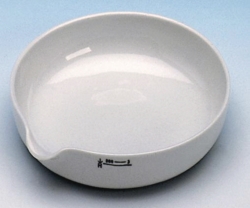
Evaporating basins, porcelain, shallow form
Glazed inside and outside except for rim.*According to DIN standard
€12.32*
Promotion
Evaporating basins, porcelain, shallow form
Glazed inside and outside except for rim.*According to DIN standard
€12.32*