 Quick delivery

30%

LLG Labware
Spectrophotometer LLG-uniSPEC 1
Depth:
280 mm
|
Dimensions (WxDxH):
420 x 280 x 180 mm
|
Dual Use:
0
|
Height:
180 mm
|
Manufacturer Article Number:
6263636
|
Plug type:
EU/UK
|
Power supply:
110 ... 250 V
|
Type:
LLG-uniSPEC 1
|
Type of auxiliary energy:
Mains connection
|
Weight:
12 kg
|
Width:
420 mm
LLG-uniSPEC 1 UV/VIS spectrophotometer is the ideal device for various routine laboratory applications including quality control, basic research and education. This high quality, accurate and cost-efficient unit is equipped with a large LCD display that shows standard curves and other test results.LLG-uniSPEC 1 enables without software the measuring of absorption, transmission as well as concentration, and factor determination via standard curves. It can save 200 groups of data and display wavelength, absorbance and transmittance.Optional software based on Windows 10 expand the application to kinetics, spectrum scanning and multi-wavelength measurements.Stand-alone unit with large 2.5” LCD DisplayOptional software for Windows 10Automatic wavelength settingEasy creation of standard curves for concentration determinationTungsten lamp and deuterium lamp reduce stray light which ensure high photometric accuracyUSB and parallel portLarge storage capacity of up to 200 groups of test resultsScope of supply: Spectrophotometer, dust cover, manual, 4 glass cuvettes, 2 quartz cuvettesOptical system:Single beam, grating 1200 lines/mmWavelength range:190 ... 1000 nmBandwidth:2 nmWavelength accuracy:±2 nmWavelength repeatability:0.5 nmWavelength setting:AutoPhotometric accuracy:±0.5 % TPhotometric repeatability:≤0.2 % TPhotometric range:-0.3 ... 3 A, 0 ... 200 % T, 0 ... 9999 CPhotometric mode:T, A, C, FStray light:≤0.1 % TPhotometric stability:≤0.002 A/30 minDisplay:LCD, 128 x 64 DotsDetector:Silicon photodiodeLight source:Tungsten and deuterium lampOutput:USB port, parallel port
€1,715.00*
€2,450.00*
(30% saved)
37%

LLG Labware
Spectrophotometer LLG-uniSPEC 2
Depth:
360 mm
|
Dimensions (WxDxH):
460 x 360 x 225 mm
|
Dual Use:
0
|
Height:
225 mm
|
Manufacturer Article Number:
6263610
|
Max. voltage:
220 V
|
Plug type:
EU
|
Power supply:
220 V, 50 Hz
|
Power supply frequency:
50 Hz
|
Type:
LLG-uniSPEC 2
|
Type of auxiliary energy:
Mains connection
|
Warranty:
3 years
|
Weight:
18 kg
|
Width:
460 mm
High-quality and cost-efficient UV/VIS spectrophotometer for pharmaceutical, biochemical, and clinical lab applications. Suitable for different measurement types such as kinetics, wavelength scans, quantitative analysis, multi-wavelength, and DNA/Protein analysis. LLG-uniSPEC 2 is ideal for standard routine measurements.The device can store and save 200 calibration curves. A pre-adjusted lamp design allows a fast and easy lamp replacement. Both lamps can be individually turned on/off to extend the durability. The device can be used either as stand-alone unit or can be operated via a PC by using the supplied software.Single beam system, grid with 1200 lines/mmSilicon photodiode detectorParallel port for printer outputUSB port4 position cell holder (10 mm) includedAdditional cell holders optionally availableLCD displayDeuterium and tungsten lampAutomatic wavelength adjustmentScope of supply: Spectrophotometer, software for connection to PC, 4 glass cells, 2 quartz cellsSpecificationsLLG-uniSPEC 2Optical System:Single beam, grating 1200 lines/mm, silicon photodiode detectorWavelength range:
Bandwidth:190 ... 1100 nm
2 nmWavelength accuracy:
Wavelength repeatability:
Wavelength setting:±0.5 nm
0.3 nm
automaticPhotometric accuracy:
Photometric repeatability:
Photometric range:±0.5 % T
0.3 % T
-0.3-3 A, 0-200 %T, 0-9999 CStability:
Stray light:±0.002 A/h at 500 nm
≤0.1 % T at 220 nm, 360 nmData output:
Printer port:
Display:USB port
parallel port
128 x 64 Dots LCDStandard cell holder:
Lamps:4-position 10 mm cell changer
D2 lamp and W lamp
€2,518.75*
€3,987.70*
(36.84% saved)
15%

Biochrom Ltd.
Colorimeter Ultrospec 35c
Depth:
210 mm
|
Dimensions (WxDxH):
170 x 210 x 50 mm
|
Dual Use:
0
|
Height:
50 mm
|
Illuminants:
LED
|
Manufacturer Article Number:
80-3008-00
|
Power supply:
100 ... 240 V, 50/60 Hz
|
Type:
Ultrospec 35c
|
Type of auxiliary energy:
Mains connection/rechargeable battery
|
Weight:
0.6 kg
|
Width:
170 mm
Compact, portable colorimeter for measuring the absorbance/transmission of liquid samples in a cuvette or test tube at a specified wavelength to determine the molecular concentration. Ideal for use in the laboratory or in the field for quantification and analysis in life science, chemistry, and physics.Large, backlit 4.3" LCD colour touchscreen displayUSB ports for exporting measurement dataModes: Absorbance, % transmission, kineticsSelectable wavelengths: 450, 500, 520, 540, 600, 640 nmStorage of measurement dataEasy cleaning and maintenanceScope of supply: Colorimeter, USB-C cable, 8 cuvettes, quick start guide, power supply with plug adapter EU, UK, China/AUS, USSpecificationsWavelength range:450 ... 640 nmSpectral bandwidth:40 nmPhotometric range:0.3 ... 2.0 APhotometric accuracy:±0.05A 1APhotometric repeatability:±0.02A at 1A
€1,189.15*
€1,399.00*
(15% saved)
15%

Biochrom Ltd.
Cell density meter Ultrospec 30
Depth:
210 mm
|
Dimensions (WxDxH):
170 x 210 x 50 mm
|
Dual Use:
0
|
Height:
50 mm
|
Illuminants:
LED
|
Manufacturer Article Number:
80-3008-01
|
Power supply:
100 ... 240 V, 50/60 Hz
|
Type:
Ultrospec 30
|
Type of auxiliary energy:
Mains connection/rechargeable battery
|
Weight:
0.6 kg
|
Width:
170 mm
Compact, portable device for measuring the density of cells in suspension at 600 nm. Ideally suited for microbiology applications such as plasmid amplification, antibiotic studies, and for performing growth phase analysis in bacterial and yeast suspensions. With the Ultrospec 30, standard curves can be generated using absorbance values or McFarland standards and stored for future quantification.Large, backlit 4.3" LCD colour touchscreen displayUSB ports for exporting measurement dataIntuitive menu arrangementStorage of measurement dataEasy cleaning and maintenanceScope of supply: Cell density meter, USB-C cable, 8 cuvettes, quick start guide, power supply with plug adapter EU, UK, China/AUS, USSpecificationsWavelength:600 nmSpectral bandwidth:40 nmPhotometric range:0.3 ... 2.0 APhotometric accuracy:±0.05A 1APhotometric repeatability:±0.02A at 1A
€1,189.15*
€1,399.00*
(15% saved)

Merck KGaA
Spectroquant® Ammonium cell test, 4,0 - 80,0 mg/L NH₄ - N, 5,2 - 103,0 mg/L NH₄
Description:
cell test
|
Measuring range:
4,0 - 80,0 mg/L NH₄ - N, 5,2 - 103,0 mg/L NH₄
Spectroquant® test kits
For fast and reliable evaluation with Spectroquant® photometers. Simple and user-friendly handling thanks to barcode recognition. Batch certificate available for each test kit.Spectroquant® reagent test- ready-to-use reagent mixture- variable measuring range via choice of cuvette format- Comprehensive package insert on areas of application, working steps and reaction principle.- stable for 3 years at room temperatureSpectroquant® cuvette test- all necessary reagents included- simple and user-friendly method- Extensive package insert about application areas, working steps and reaction principle.- 3 years shelf life at room temperature
€119.78*

Bellingham + Stanley Ltd.
Saccharimeter ADS435/ADS438, with glass tube
Accuracy:
±0.030 °Z
|
Accuracy temperature:
±0.1 °C
|
Accuracy temperature Number:
0.1 °C
|
Dual Use:
0
|
Length tube:
200 mm
|
Manufacturer Article Number:
37-25
|
Max. temperature:
40 °C
|
Max. voltage:
240 V
|
Measuring range:
-225 ... 225 °Z
|
Min. temperature:
5 °C
|
Min. voltage:
100 V
|
Power supply:
100 ... 240 V, 50/60 Hz
|
Power supply frequency:
50/60 Hz
|
Resolution:
0.01/0.001 °Z
|
Temperature:
5 ... 40 °C
|
Type:
ADS435
|
Type of auxiliary energy:
Mains connection
|
Wavelength:
589 nm
The Saccharimeter is a dedicated polarimeter that displays results in °Z according to the ISS scale and is suitable for sugar laboratories, factories, and raw material receiving centres. The device is designed to operate in isolation but works best when connected to an RFM300 or RFM700 refractometer. By connecting a digital refractometer, a complete purity system can be created that enables accurate purity measurements.High resolution 4" full colour display with easy-to-use keypadContinuous measurement or single measurementsLED light sourceRFID user identificationData memory for over 8000 readingsMethod system with limit valuesUSB "Back-up & Clone"User maintenance promptssUSB (A), USB (B), and Ethernet interfaceAll packages are supplied with corresponding cell, lid, integrated purity, LIMS logger PC software, RFID tags, and declaration of conformity.The Saccharimeter is a dedicated polarimeter that displays results in °Z according to the ISS scale and is suitable for sugar laboratories, factories, and raw material receiving centres. The device is designed to operate in isolation but works best when connected to an RFM300 or RFM700 refractometer. By connecting a digital refractometer, a complete purity system can be created that enables accurate purity measurements.High resolution 4" full colour display with easy-to-use keypadContinuous measurement or single measurementsLED light sourceRFID user identificationData memory for over 8000 readingsMethod system with limit valuesUSB "Back-up & Clone"User maintenance promptssUSB (A), USB (B), and Ethernet interfaceAll packages are supplied with corresponding cell, lid, integrated purity, LIMS logger PC software, RFID tags, and declaration of conformity.
€10,137.00*

Bellingham + Stanley Ltd.
Polarimeter ADP600 series
Accuracy:
±0.003 °A (589 nm)
|
Accuracy temperature:
±0.2 °C
|
Accuracy temperature Number:
0.2 °C
|
Dual Use:
0
|
Manufacturer Article Number:
37-61
|
Max. temperature:
35 °C
|
Max. voltage:
250 V
|
Measuring range:
-355 ... 355 °A
|
Min. temperature:
15 °C
|
Min. voltage:
100 V
|
Power supply:
100 ... 250 V, 50/60 Hz
|
Power supply frequency:
50/60 Hz
|
Resolution:
0.0001 °A
|
Temperature:
15 ... 35 °C
|
Type:
ADP610
|
Type of auxiliary energy:
Mains connection
|
Wavelength:
589 nm
High-precision polarimeter with Peltier temperature control for applications in pharmacy, chemistry, food industry, and research. Pre-programmed methods (e.g. concentration, invert sugar, inversion (A-B), and specific rotation) simplify the performance of routine analyses.High-resolution 7.4" LCD touchscreenSimple menu structure with a method systemRFID user identificationUV/VIS lamp with narrow band filterSuitable for standard and low volume tubesUSB (A), USB (B), RS232, and Ethernet interfaceSupports FDA Regulation 21 CFR Part 11USP/EP/BP/JP compliant
€20,786.00*
Bellingham + Stanley Ltd.
Saccharimeter ADS455-F/ADS458-F, with XPC temperature control and funnel flow tube
Accuracy:
±0.030 °Z
|
Accuracy temperature:
±0.1 °C
|
Accuracy temperature Number:
0.1 °C
|
Dual Use:
0
|
Length tube:
100 mm
|
Manufacturer Article Number:
37-46
|
Max. temperature:
35 °C
|
Max. voltage:
240 V
|
Measuring range:
-225 ... 225 °Z
|
Min. temperature:
15 °C
|
Min. voltage:
100 V
|
Power supply:
100 ... 240 V, 50/60 Hz
|
Power supply frequency:
50/60 Hz
|
Resolution:
0.01/0.001 °Z
|
Temperature:
15 ... 35 °C
|
Type:
ADS455-F100
|
Type of auxiliary energy:
Mains connection
|
Wavelength:
589 nm
The Saccharimeter is a dedicated polarimeter that displays results in °Z according to the ISS scale and is suitable for sugar laboratories, factories, and raw material receiving centres. The device is designed to operate in isolation but works best when connected to an RFM300 or RFM700 refractometer. By connecting a digital refractometer, a complete purity system can be created that enables accurate purity measurements.High resolution 4" full colour display with easy-to-use keypadContinuous measurement or single measurementsLED light sourceRFID user identificationData memory for over 8000 readingsMethod system with limit valuesUSB "Back-up & Clone"User maintenance promptssUSB (A), USB (B), and Ethernet interfaceAll packages are supplied with corresponding cell, lid, integrated purity, LIMS logger PC software, RFID tags, and declaration of conformity.Patented, integrated Peltier temperature control systemFunnel flow tubes are ideal for high sample throughput
€14,906.00*
Bellingham + Stanley Ltd.
Saccharimeter ADS435-F/ADS438-F, with funnel flow tube
Accuracy:
±0.030 °Z
|
Accuracy temperature:
±0.1 °C
|
Accuracy temperature Number:
0.1 °C
|
Dual Use:
0
|
Length tube:
100 mm
|
Manufacturer Article Number:
37-26
|
Max. temperature:
40 °C
|
Max. voltage:
240 V
|
Measuring range:
-225 ... 225 °Z
|
Min. temperature:
5 °C
|
Min. voltage:
100 V
|
Power supply:
100 ... 240 V, 50/60 Hz
|
Power supply frequency:
50/60 Hz
|
Resolution:
0.01/0.001 °Z
|
Temperature:
5 ... 40 °C
|
Type:
ADS435-F100
|
Type of auxiliary energy:
Mains connection
|
Wavelength:
589 nm
The Saccharimeter is a dedicated polarimeter that displays results in °Z according to the ISS scale and is suitable for sugar laboratories, factories, and raw material receiving centres. The device is designed to operate in isolation but works best when connected to an RFM300 or RFM700 refractometer. By connecting a digital refractometer, a complete purity system can be created that enables accurate purity measurements.High resolution 4" full colour display with easy-to-use keypadContinuous measurement or single measurementsLED light sourceRFID user identificationData memory for over 8000 readingsMethod system with limit valuesUSB "Back-up & Clone"User maintenance promptssUSB (A), USB (B), and Ethernet interfaceAll packages are supplied with corresponding cell, lid, integrated purity, LIMS logger PC software, RFID tags, and declaration of conformity.Funnel flow tubes are ideal for high sample throughput
€11,272.00*

Bellingham + Stanley Ltd.
Polarimeter ADP430
Accuracy:
±0.010 °A±0.030 °Z
|
Accuracy temperature:
±0.1 °C
|
Accuracy temperature Number:
0.1 °C
|
Dual Use:
0
|
Length tube:
200 mm
|
Manufacturer Article Number:
37-30
|
Max. temperature:
40 °C
|
Max. voltage:
240 V
|
Measuring range:
-355 ... 355 °A-225 ... 225 °Z
|
Min. temperature:
5 °C
|
Min. voltage:
100 V
|
Power supply:
100 ... 240 V, 50/60 Hz
|
Power supply frequency:
50/60 Hz
|
Resolution:
0.01/0.001 °A0.01/0.001 °Z
|
Temperature:
5 ... 40 °C
|
Type:
ADP430
|
Type of auxiliary energy:
Mains connection
|
Wavelength:
589 nm
General purpose single wavelength polarimeter for applications in the sugar, food, chemical, and pharmaceutical industry. Measurements can be performed in angular degrees (°A), sugar (ISS), or user-defined scales. Pre-programmed methods (e.g. PHR-MEAN method, invert sugar, inversion (A-B), and specific rotation) simplify the performance of routine analyses.High-resolution 4" HD colour displayLED light sourceInterference filter with photodiode detector technologyContinuous measurement and single measurementRFID user identificationData memory for over 8000 readingsMeasurement up to an optical density of 3.0Output as secure PDF possibleUSB (A), USB (B), and Ethernet interfaceSupports FDA Regulation 21 CFR Part 11USP/EP/BP compliantSuitable for applications where internal temperature control is not required, the use of automatic temperature compensation is used, or a water bath is preferred.
€10,341.00*
Bellingham + Stanley Ltd.
Saccharimeter ADS455/ADS458, with XPC temperature control and metal tube
Accuracy:
±0.030 °Z
|
Accuracy temperature:
±0.1 °C
|
Accuracy temperature Number:
0.1 °C
|
Dual Use:
0
|
Length tube:
200 mm
|
Manufacturer Article Number:
37-45
|
Max. temperature:
35 °C
|
Max. voltage:
240 V
|
Measuring range:
-225 ... 225 °Z
|
Min. temperature:
15 °C
|
Min. voltage:
100 V
|
Power supply:
100 ... 240 V, 50/60 Hz
|
Power supply frequency:
50/60 Hz
|
Resolution:
0.01/0.001 °Z
|
Temperature:
15 ... 35 °C
|
Type:
ADS455
|
Type of auxiliary energy:
Mains connection
|
Wavelength:
589 nm
The Saccharimeter is a dedicated polarimeter that displays results in °Z according to the ISS scale and is suitable for sugar laboratories, factories, and raw material receiving centres. The device is designed to operate in isolation but works best when connected to an RFM300 or RFM700 refractometer. By connecting a digital refractometer, a complete purity system can be created that enables accurate purity measurements.High resolution 4" full colour display with easy-to-use keypadContinuous measurement or single measurementsLED light sourceRFID user identificationData memory for over 8000 readingsMethod system with limit valuesUSB "Back-up & Clone"User maintenance promptssUSB (A), USB (B), and Ethernet interfaceAll packages are supplied with corresponding cell, lid, integrated purity, LIMS logger PC software, RFID tags, and declaration of conformity.Patented, integrated Peltier temperature control system
€13,788.00*
Bellingham + Stanley Ltd.
Polarimeter ADP450-HCl
Accuracy:
±0.010 °A±0.030 °Z
|
Accuracy temperature:
±0.1 °C
|
Accuracy temperature Number:
0.1 °C
|
Dual Use:
0
|
Length tube:
200 mm
|
Manufacturer Article Number:
37-98
|
Max. temperature:
35 °C
|
Max. voltage:
240 V
|
Measuring range:
-355 ... 355 °A-225 ... 225 °Z
|
Min. temperature:
15 °C
|
Min. voltage:
100 V
|
Power supply:
100 ... 240 V, 50/60 Hz
|
Power supply frequency:
50/60 Hz
|
Resolution:
0.01/0.001 °A0.01/0.001 °Z
|
Temperature:
15 ... 35 °C
|
Type:
ADP450-HCl
|
Type of auxiliary energy:
Mains connection
|
Wavelength:
589 nm
General purpose single wavelength polarimeter for applications in the sugar, food, chemical, and pharmaceutical industry. Measurements can be performed in angular degrees (°A), sugar (ISS), or user-defined scales. Pre-programmed methods (e.g. PHR-MEAN method, invert sugar, inversion (A-B), and specific rotation) simplify the performance of routine analyses.High-resolution 4" HD colour displayLED light sourceInterference filter with photodiode detector technologyContinuous measurement and single measurementRFID user identificationData memory for over 8000 readingsMeasurement up to an optical density of 3.0Output as secure PDF possibleUSB (A), USB (B), and Ethernet interfaceSupports FDA Regulation 21 CFR Part 11USP/EP/BP compliantPatented, integrated Peltier temperature control systemSMART temperature stabilityGlass/PEEK polarimeter tubeSuitable for tests with hydrochloric acid
€14,541.00*
Bellingham + Stanley Ltd.
Polarimeter ADP450
Accuracy:
±0.010 °A±0.030 °Z
|
Accuracy temperature:
±0.1 °C
|
Accuracy temperature Number:
0.1 °C
|
Dual Use:
0
|
Length tube:
200 mm
|
Manufacturer Article Number:
37-50
|
Max. temperature:
35 °C
|
Max. voltage:
240 V
|
Measuring range:
-355 ... 355 °A-225 ... 225 °Z
|
Min. temperature:
15 °C
|
Min. voltage:
100 V
|
Power supply:
100 ... 240 V, 50/60 Hz
|
Power supply frequency:
50/60 Hz
|
Resolution:
0.01/0.001 °A0.01/0.001 °Z
|
Temperature:
15 ... 35 °C
|
Type:
ADP450
|
Type of auxiliary energy:
Mains connection
|
Wavelength:
589 nm
General purpose single wavelength polarimeter for applications in the sugar, food, chemical, and pharmaceutical industry. Measurements can be performed in angular degrees (°A), sugar (ISS), or user-defined scales. Pre-programmed methods (e.g. PHR-MEAN method, invert sugar, inversion (A-B), and specific rotation) simplify the performance of routine analyses.High-resolution 4" HD colour displayLED light sourceInterference filter with photodiode detector technologyContinuous measurement and single measurementRFID user identificationData memory for over 8000 readingsMeasurement up to an optical density of 3.0Output as secure PDF possibleUSB (A), USB (B), and Ethernet interfaceSupports FDA Regulation 21 CFR Part 11USP/EP/BP compliantPatented, integrated Peltier temperature control systemSMART temperature stability
€14,066.00*
Bellingham + Stanley Ltd.
Saccharimeter ADS620P
Accuracy:
±0.01 °Z (589 nm)
|
Accuracy temperature:
±0.2 °C
|
Accuracy temperature Number:
0.2 °C
|
Dual Use:
0
|
Manufacturer Article Number:
37-72
|
Max. temperature:
35 °C
|
Max. voltage:
250 V
|
Measuring range:
-225 ... 225 °Z
|
Min. temperature:
15 °C
|
Min. voltage:
100 V
|
Power supply:
100 ... 250 V, 50/60 Hz
|
Power supply frequency:
50/60 Hz
|
Resolution:
0.002 °Z
|
Temperature:
15 ... 35 °C
|
Type:
ADS620P
|
Type of auxiliary energy:
Mains connection
|
Wavelength:
589/880 nm
High-precision saccharimeter with dual wavelengths Peltier temperature control for use in the sugar industry. Rapid configuration of the device from standard saccharimeter mode to a more complex sugar purity system that calculates Brix, POL, density and purity, with Brix value entered manually via the touchscreen or directly via an Ethernet connection from a connected RFM refractometer.High-resolution 7.4" colour touchscreenSimple menu structure with a method systemRFID user identificationVIS/NIR lamp with narrow band filterSuitable for standard tubesIntegral Sugar Purity softwareUSB (A), USB (B), RS232, and Ethernet interface
€22,798.00*

LLG Labware
Spectrophotometer LLG-uniSPEC 4
Depth:
430 mm
|
Dimensions (WxDxH):
625 x 430 x 206 mm
|
Dual Use:
0
|
Height:
206 mm
|
Manufacturer Article Number:
6263620
|
Max. voltage:
220 V
|
Plug type:
EU
|
Power supply:
220 V, 50 Hz
|
Power supply frequency:
50 Hz
|
Type:
LLG-uniSPEC 4
|
Type of auxiliary energy:
Mains connection
|
Warranty:
3 years
|
Weight:
28 kg
|
Width:
625 mm
High-quality and cost-efficient UV/VIS spectrophotometer for pharmaceutical, biochemical, and clinical lab applications. Suitable for different measurement types such as kinetics, wavelength scans, quantitative analysis, multi-wavelength, and DNA/Protein analysis. LLG-uniSPEC 4 is ideal for complex measurements e.g. required for quality controls.LLG-uniSPEC 4 features a small band width and a high wavelength accuracy. The device can store and save 200 calibration curves. A pre-adjusted lamp design allows a fast and easy lamp replacement. Both lamps can be individually turned on/off to extend the durability. The device can be used either as stand-alone unit or can be operated via a PC by using the supplied software.Single beam system, grid with 1200 lines/mmSilicon photodiode detectorParallel port for printer outputUSB port4 position cell holder (10 mm) includedAdditional cell holders optionally availableLCD displayDeuterium and tungsten lampAutomatic wavelength adjustmentScope of supply: Spectrophotometer, software for connection to PC, 4 glass cells, 2 quartz cellsSpecificationsLLG-uniSPEC 4Optical System:Single beam, grating 1200 lines/mm, silicon photodiode detectorWavelength range:
Bandwidth:190 ... 1100 nm
1.8 nmWavelength accuracy:
Wavelength repeatability:
Wavelength setting:±0.3 nm
0.2 nm
automaticPhotometric accuracy:
Photometric repeatability:
Photometric range:±0.3 % T
0.2 % T
-0.3-3 A, 0-200 % T, 0-9999 CStability:
Stray light:±0.002 A/h at 500 nm
≤0.05 % T at 220 nm, 360 nmData output:
Printer port:
Display:USB port
parallel port
320 x 240 Dots LCDStandard cell holder:
Lamps:4-position 10 mm cell changer
D2 lamp and W lamp
€5,595.00*

The Tintometer Limited
Colorimeter Fx
Dual Use:
0
|
Manufacturer Article Number:
169200
|
Plug type:
EU, UK, US
|
Type:
Fx
The Lovibond® Model Fx solves the problem of measuring the colour of edible oils and fats with its unique ability to not only keep the oil at a constant temperature but also to measure and report on the temperature of the sample, avoiding any misreading from crystallisation. The oils can now be measured in their natural and correct state.Avoids misreading from crystallisationMeasures Lovibond® RYBN, Lovibond RY10:1, AOCS RY, Chlorophyll & b-CaroteneAllows the Measurement of Hot Samples (Integrated Heater)Ensured Compliance to StandardsScope of supply: Colorimeter, W600/B/1" cell (borosilicate, 1" path length), W600/B/5¼" cell (borosilicate, 5¼" path length), external power supply, quick start guide (hard copy), USB memory stick (containing the manuals), certificate of conformitySpecificationsWavelength Range:380 ... 780 nmAccuracy:± 0.2 nmSpectral Scope: 15 nmPhotometric Range:0 ... 100 % TLinearity:± 0.01 % TStray light: 0.01 % TInterfaces:USB, RS 232Dimensions (W x D x H):301 x 152 x 331 mmWeight:516 g
€9,555.80*

Xylem Analytics Germany (WTW)
Photometer photoLab® and photoFlex®, stored test protocols
Description:
Ammonium, NH4-N
|
For:
A
|
GHS:
GHS07
|
Manufacturer Article Number:
250495
|
No. of determinations:
25
|
Type:
14739
|
UNSPSC:
41-12-18-13
|
Unit:
0.01 - 2.00 mg/l
A: Stored in photoLab® S6, S12, photoLab® 6000 Serie and photoLab® SpektralB: Stored in photoLab® S12, photoLab® 6000 Serie and photoLab® SpektralC: Stored in photoFlex® and photoFlex® Turb®Reagent-free tests:Cu - copper plating bath, 690nm, 820nm - copper plating bath - BCrO3 - chromium plating bath - chromium plating bath - BNi - nickel plating bath - nickel plating bath - BHZ - Hazen colour - Hazen colour - BIFZ - iodine number, 340nm, 455nm - iodine number - Bm-1 (DFZ) - colouring - FB445 - B, Cm-1 (DFZ) - colouring - FB525 - A, Cm-1 (DFZ) - colouring - FB620 - B, CFAU - turbidity 620 - T620 - BE - extinction - extinction - A, B, CSAK - Spectral absorption coefficient at 254 and 436nm photoLab® 6100 VIS (436nm) and UV-VIS photoLab® 6600 (254/436nm)Further tests on demand, range information is based on max. area and can also be smaller for photoFlex®.A: Stored in photoLab® S6, S12, photoLab® 6000 Serie and photoLab® SpektralB: Stored in photoLab® S12, photoLab® 6000 Serie and photoLab® SpektralC: Stored in photoFlex® and photoFlex® Turb®Reagent-free tests:Cu - copper plating bath, 690nm, 820nm - copper plating bath - BCrO3 - chromium plating bath - chromium plating bath - BNi - nickel plating bath - nickel plating bath - BHZ - Hazen colour - Hazen colour - BIFZ - iodine number, 340nm, 455nm - iodine number - Bm-1 (DFZ) - colouring - FB445 - B, Cm-1 (DFZ) - colouring - FB525 - A, Cm-1 (DFZ) - colouring - FB620 - B, CFAU - turbidity 620 - T620 - BE - extinction - extinction - A, B, CSAK - Spectral absorption coefficient at 254 and 436nm photoLab® 6100 VIS (436nm) and UV-VIS photoLab® 6600 (254/436nm)Further tests on demand, range information is based on max. area and can also be smaller for photoFlex®.Hazardous Substance DataGHSSignal wordAchtungH-SatzH302, H412P-SatzP273UNNR3316SDSLink
€98.00*

Macherey-Nagel GmbH & Co. KG
Tube tests NANOCOLOR® Sulfide / Sulfite / Sulfate
Description:
Sulfide 3
|
GHS:
GHS05, GHS07
|
Manufacturer Article Number:
985073
|
Measuring range:
0,05 - 3,00 mg/l S2-
|
UNSPSC:
41-11-61-16
A maximum in accuracy and precision is granted for the measurement results due to exactly pre-dosed reagents in 16 mm cuvettes and additional reagents. The tests are pre-programmed in photometers and selected automatically via a barcode on the cuvette. The contact with any dangerous chemicals is avoided because the measurement is performed directly in the test tube. This guarantees maximum safety for the user.A maximum in accuracy and precision is granted for the measurement results due to exactly pre-dosed reagents in 16 mm cuvettes and additional reagents. The tests are pre-programmed in photometers and selected automatically via a barcode on the cuvette. The contact with any dangerous chemicals is avoided because the measurement is performed directly in the test tube. This guarantees maximum safety for the user.A maximum in accuracy and precision is granted for the measurement results due to exactly pre-dosed reagents in 16 mm cuvettes and additional reagents. The tests are pre-programmed in photometers and selected automatically via a barcode on the cuvette. The contact with any dangerous chemicals is avoided because the measurement is performed directly in the test tube. This guarantees maximum safety for the user.Hazardous Substance DataGHSSignal wordGefahrH-SatzH314, H315, H319, H412P-SatzP260sh, P273, P280sh, P303+P361+P353, P305+P351+P338, P310SDSLink
€77.60*

The Tintometer Limited
Lovibond® Nessleriser Systems, Pt-Co/Hazen/APHA Scale
Colour scale:
Gardner 1 - 18
|
Dual Use:
0
|
Manufacturer Article Number:
433340
|
Type:
AF 334
|
UNSPSC:
41-11-53-18
Lovibond® Comparator 2000+ is a quality instrument for the visual analysis of colour intensity in analysis samples using Lovibond colour discs. The integral cell attachment enables cells with a depth of 40mm to be accepted. The Lovibond® Nessleriser system provides greater depths by using corresponding accessory Nessler tubes. This enables the determination of concentrations below the detection limit of the Lovibond® Comparator 2000+. The integral prism in the Lovibond® Comparator 2000+ brings the glass standard of the colour discs and the colour samples optically into the field of view. The prism is hermetically sealed, preventing the lens from being contaminated. Both the Comparator 2000+ and the Nessleriser are designed in such a way that they compensate for cloudy or coloured water samples. Each device is available for use in daylight or in combination with the artificial daylight unit 2000.ModelApparatus includedAF 325:Nessleriser 2150 with Daylight 2000 Lighting Unit and 113 mm (50ml) Nessler cylinders, Pt-Co discs NSH (10 to 90mg Pt/l), NSB (70 to 250mg Pt/l), stand for using Nessleriser with natural light.AF 328:Nessleriser 2250 with Daylight 2000 Lighting Unit and 250mm Nessler cylinders, Pt-Co discs CAA (0 to 30mg Pt/l), CAB (30 to 70mg Pt/l), stand for using Nessleriser with natural light.AF 329:Nessleriser 2150 with Daylight 2000 Lighting Unit and 113mm (50ml) Nessler cylinders, Nessleriser 2250 upgrade with 250mm Nessler cylinders, Pt-Co discs CAA (0 to 30mg Pt/l) CAB (30 to 70mg Pt/l), NSB (70 to 250mg Pt/l), stand for using Nessleriser with natural light.AF 330:Comparator 2000+ with Daylight 2000 Lighting Unit (EBC Version), EBC discs (4/14A, 2 - 6; 4/14B, 6 - 10; 4/14C, 10 - 18; 4/14D, 19 - 27), 2 x W680/OG/25 mm fused cellsAF 334:Comparator 2000+ with Daylight 2000 Lighting Unit, Gardner discs (4/30 AS, 1 - 9; 4/30 BS, 10 - 18), 2 x W680/OG/10 mm fused cells
€1,932.80*

Water-i.d. GmbH
pH electrodes, starter kit, for PrimeLab 2.0
Dual Use:
0
|
Manufacturer Article Number:
PL2SP-ELPHGLATC-
|
Material:
Glass
|
Range pH:
0 ... 14
|
Temp. range °C:
0 ... 80
|
Temperature sensor:
NTC 30kΩ
For pH measurements of water solutions in research, environmental monitoring and quality control.With integrated temperature sensorNot refillableAutomatic recognition of connected electrodesSynchronisation via LabCOM®, LabCOM® Cloud (optional and free of charge)ProbeBOX 1.0 to connect the electrodes to the PrimeLab 2.0Scope of supply:pH electrode, 3 x 20 ml buffer solution (pH 4.00 / 7.00 / 10.00), 10 ml KCI solution, USB type-C cable, ProbeBOX 1.0, carrying case, user manual
€444.60*

The Tintometer Limited
Colorimeters, Lovibond® PFXi series
Colour scale:
Pt-Co/Hazen/APHA, Gardner, Iodine
|
Dual Use:
0
|
For:
Chemicals & Industrial Oils
|
Manufacturer Article Number:
1371951
|
Type:
PFXi-195/1
The PFXi series of spectrophotometric colorimeters introduces a unique concept in liquid colour control: RCMSi technology (Remote Calibration & Maintenance Service via internet). Users can benefit from the capability for remote calibration and servicing via the internet - eliminating any costs and time delays associated with servicing and guaranteeing compliance with standards. The PFXi range is supplied with a full range of colour scales for specific markets including, but not limited to, Petroleum, Edible Oils, Pharmaceuticals, Brewing and Honey. Users can upgrade scales remotely at any time. Every PFXi is supplied with colour control software for data analysis (LAN & USB cable provided). Optical glass cells, a certified glass calibration filter, a spare lamp and user instructions included. The PFXi-880 and -995 series are available with an optional integrated heater unit. (This is not available for the PFXi-195). This is a critical feature when dealing with materials such as fats and waxes where temperature needs to be maintained at a constant temperature +10°C above the "Cloud Point" of the material.Please Note: CIE values and spectral data readings are standard on all the instruments listed below.
€8,168.10*

Merck KGaA
Spectroquant® Lead test
Description:
reagent test
|
Measuring range:
0,010 - 5,00 mg/l Pb
Spectroquant® test kitsFor fast and reliable evaluation with Spectroquant® photometers. Simple and user-friendly handling thanks to barcode recognition. Batch certificate available for each test kit.Spectroquant® reagent test- ready-to-use reagent mixture- variable measuring range via choice of cuvette format- Comprehensive package insert on areas of application, working steps and reaction principle.- stable for 3 years at room temperatureSpectroquant® cuvette test- all necessary reagents included- simple and user-friendly method- Extensive package insert about application areas, working steps and reaction principle.- 3 years shelf life at room temperature
€128.96*

Macherey-Nagel GmbH & Co. KG
Tube tests NANOCOLOR® DEHA
Description:
DEHA 1 (Diethylhydroxylamine)
|
Manufacturer Article Number:
985035
|
Measuring range:
0,05 - 1,00 mg/l DEHA
|
UNSPSC:
41-11-61-16
A maximum in accuracy and precision is granted for the measurement results due to exactly pre-dosed reagents in 16 mm cuvettes and additional reagents. The tests are pre-programmed in photometers and selected automatically via a barcode on the cuvette. The contact with any dangerous chemicals is avoided because the measurement is performed directly in the test tube. This guarantees maximum safety for the user.A maximum in accuracy and precision is granted for the measurement results due to exactly pre-dosed reagents in 16 mm cuvettes and additional reagents. The tests are pre-programmed in photometers and selected automatically via a barcode on the cuvette. The contact with any dangerous chemicals is avoided because the measurement is performed directly in the test tube. This guarantees maximum safety for the user.
€89.90*

Tintometer GmbH
Photometers MD 110
Description:
MD 110, chlorine, pH, cyanuric acid,alkalinity-m, liquid reagents
|
Dual Use:
0
|
GHS:
GHS05, GHS07, GHS02
|
Manufacturer Article Number:
2980752
|
Measuring range:
5 ... 200 mg/l CaCO30.02 ... 4.0 mg/l Cl210 ... 160 mg/l CyA
Photometer for the analysis of determined parameters in drinking, industrial and waste water. Different models are available for common analyses as well as for special applications.Ergonomic, waterproof designAccurate, reproducible measurement resultsUser calibration and single point calibrationMeasurement results are displayed directly in ABS or %TZero value remains valid for all tests with the same sample thanks to the one-time zero (OTZ) functionAutomatic storage of measured values with time and date stamp and optional data transfer (IRiM module)Bluetooth® interfaceScroll memoryAutomatic shutdownAdjustment function displayScope of supply: Photometer, carrying case, reagents for 100 tests, cuvettes, batteries, standard accessoriesFurther photometers available on request.SpecificationsOptics:Highly precise interference filters, LEDWavelengths:530 / 560 / 610 / 430 / 580 / 660 nmWavelength accuracy:±1 nmPhotometric range:
pH:0.005 A
6,5 - 8,4Data memory:16 measurementsDimensions (W x D x H):75 x 155 x 35 mmWeight:260 gPower supply:4 x AAA micro batteriesIP code:IP 68Photometer for the analysis of determined parameters in drinking, industrial and waste water. Different models are available for common analyses as well as for special applications.Ergonomic, waterproof designAccurate, reproducible measurement resultsUser calibration and single point calibrationMeasurement results are displayed directly in ABS or %TZero value remains valid for all tests with the same sample thanks to the one-time zero (OTZ) functionAutomatic storage of measured values with time and date stamp and optional data transfer (IRiM module)Bluetooth® interfaceScroll memoryAutomatic shutdownAdjustment function displayScope of supply: Photometer, carrying case, reagents for 100 tests, cuvettes, batteries, standard accessoriesFurther photometers available on request.SpecificationsOptics:Highly precise interference filters, LEDWavelengths:530 / 560 / 610 / 430 / 580 / 660 nmWavelength accuracy:±1 nmPhotometric range:
pH:0.005 A
6,5 - 8,4Data memory:16 measurementsDimensions (W x D x H):75 x 155 x 35 mmWeight:260 gPower supply:4 x AAA micro batteriesIP code:IP 68Hazardous Substance DataGHSSignal wordAchtungH-SatzEUH210, H290, H315, H319, H226P-SatzP234, P280, P302+P352, P305+P351+P338, P233SDSLink
€608.80*
Promotion


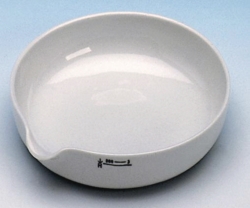
Evaporating basins, porcelain, shallow form
Glazed inside and outside except for rim.*According to DIN standard
€12.32*
Promotion
Evaporating basins, porcelain, shallow form
Glazed inside and outside except for rim.*According to DIN standard
€12.32*