 Quick delivery


MAPA GmbH
Chemical Protection Glove Ultranitrile 492, Nitrile
Ambidextrous:
No
|
Colour:
Green
|
Glove size:
11
|
Interior finish:
Velour liner
|
Length:
320 mm
|
Material:
Nitrile
|
Thickness:
0.38 mm
Green nitrile glove with cotton flock liner. Anatomical shape. Good grip finish on palm and fingers. High mechanical resistance. Excellent chemical protection against alcohols, oils, greases and hydrocarbons. Thin material for increased dexterity. Comfort, due to the quality of the flock-lining. Cat. IIIPacking with 1 pair.
€6.27*

Ganterie GmbH & Co. KG
Safety Gloves Nomex®, Heat Protection up to 250 °C
Description:
Gloves, standard
|
Glove size:
M
|
Material:
Aramide fabric
|
Max. temperature resistance:
250 °C
Very supple, offering excellent movement. Knitted construction, without seams. Temperature resistant up to 250 °C. 1 pair per pack. Cat. II
From
€36.80*

Uvex Arbeitsschutz GmbH
Safety Gloves uvex k-basic extra 6658, Cut and Heat-Protection up to +250°C
Colour:
Yellow
|
Glove size:
8
|
Interior finish:
Jersey
|
Max. temperature resistance:
250 °C
|
Temperature resistance:
250 °C
This coarse-knitted glove made of 100% Kevlar® is lined with cotton, making it ideal for protecting the wearer against heat and cuts.The combination of Kevlar® and cotton guarantees good heat insulation and enables the handling of objects up to +250 °C without losing anything in terms of cut resistance. 1 pair per pack.Characteristics:Very good protection against cut injuriesAdditional cotton claddingComfortable to wearApplications: metal processing, automotive industry, glass industry, foundries
From
€40.60*
30%

tec-lab GmbH
Cryo Protection Gloves CRYOKIT 400, CRYOKIT 550
Glove size:
7
|
Length:
400 mm
|
Max. temperature resistance:
-196 °C
|
Temperature resistance:
-196 °C
Suitable for all work with liquid nitrogen and other cryogenic gases up to approx. minus 196 °C. Protects against cold and contact burns in case of leakage of liquid gas. The waterproof glove is made of a special elastic and laminated fabric.Interior insulation: polyester multi-layer fabric ( 410 g / m2 ) and polyolefin porelle membrane.According to normative EN 511, EN 420, EN 388, Cat III. Warning: Not intended for immersion in liquid nitrogen or other liquid cryogens.1 pair per pack
€98.70*
€141.00*
(30% saved)
40%
Bel-Art Products
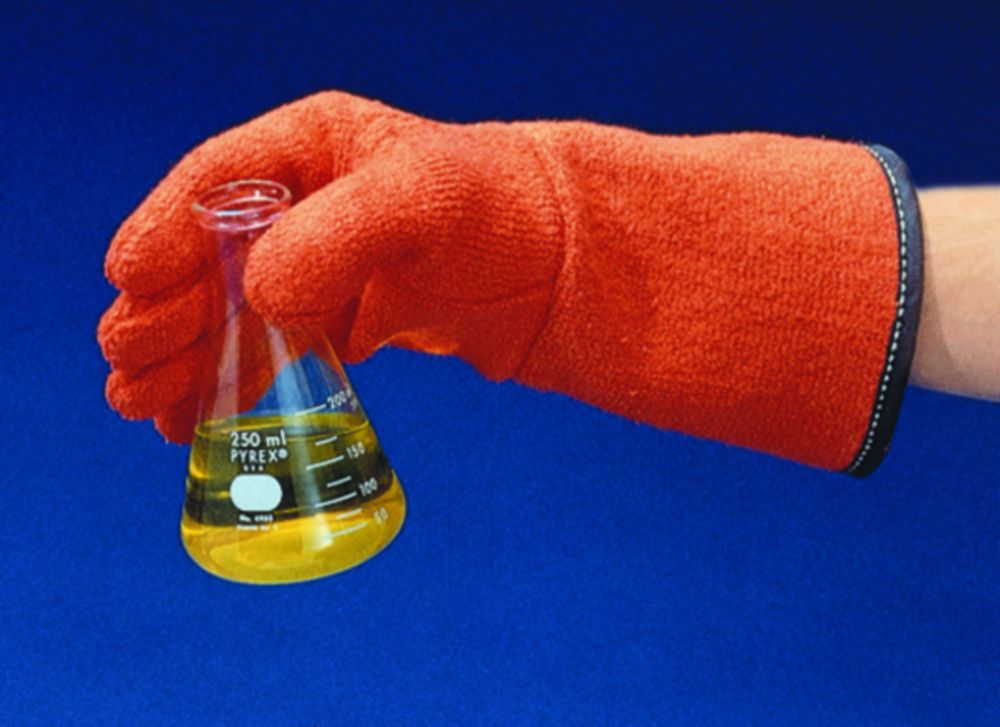
Safety Gloves Clavies®, Heat Protection up to 232°C
Length:
330 mm
|
Material:
Cotton wool
|
Max. temperature resistance:
232 °C
|
Temperature resistance:
232 °C
|
Washable:
Yes
Soft, pliant, all-cotton terry cloth gloves are superb for handling hot objects out of the autoclave or oven, or for other heat protection in the lab, school or industry. Note: Gloves are not waterproof and should not be used to handle dry ice.
€55.80*
€93.00*
(40% saved)
Werner Dorsch GmbH
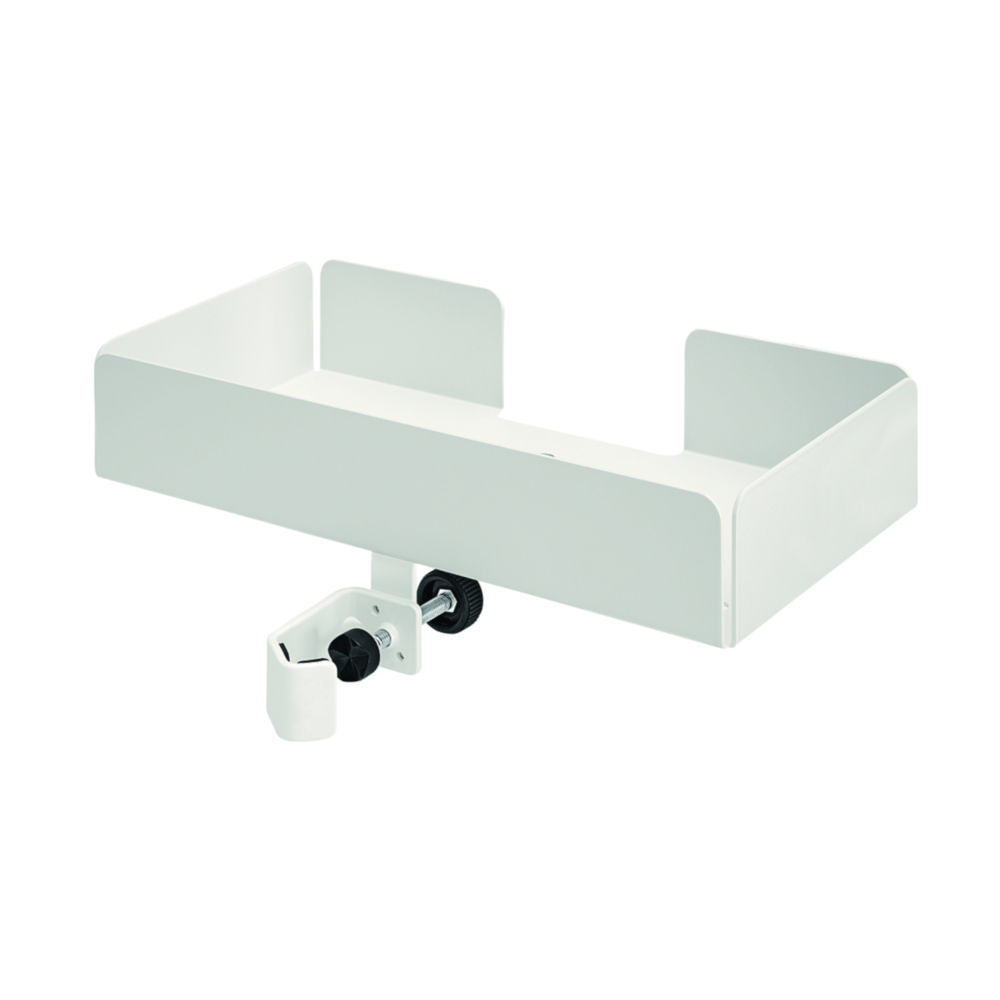
Accessories for disinfectant stand WEDO®
Description:
Shelf for disinfection stand
|
Dimensions mm:
125 x 600 x 50
|
For:
Bottles / Euromat dispensers
€33.60*
B. Braun Deutschland
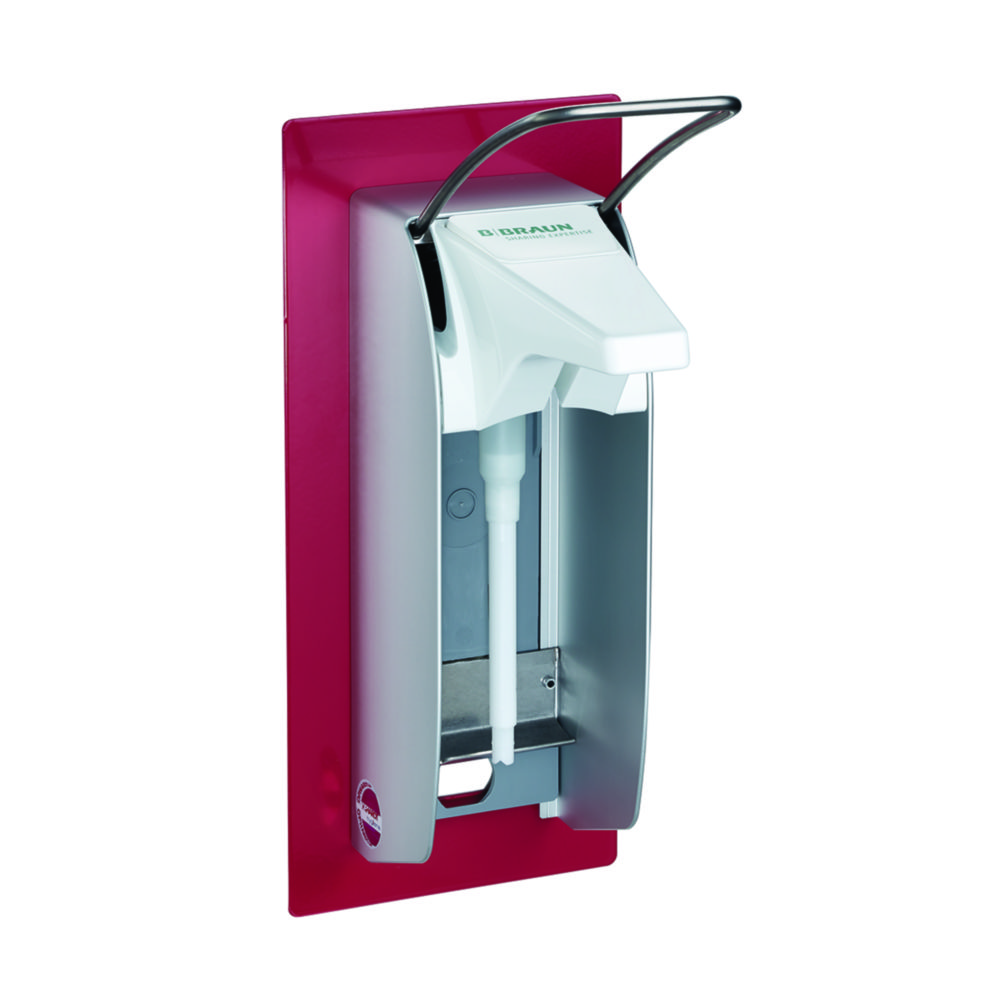
Accessories for dosing dispenser
Description:
Signal frame red
|
For:
TLS plus
€25.40*

BODE Chemie GmbH
Accessories for Wall holder Plus
Description:
Disposable pump with long outlet
€1.17*
BODE Chemie GmbH
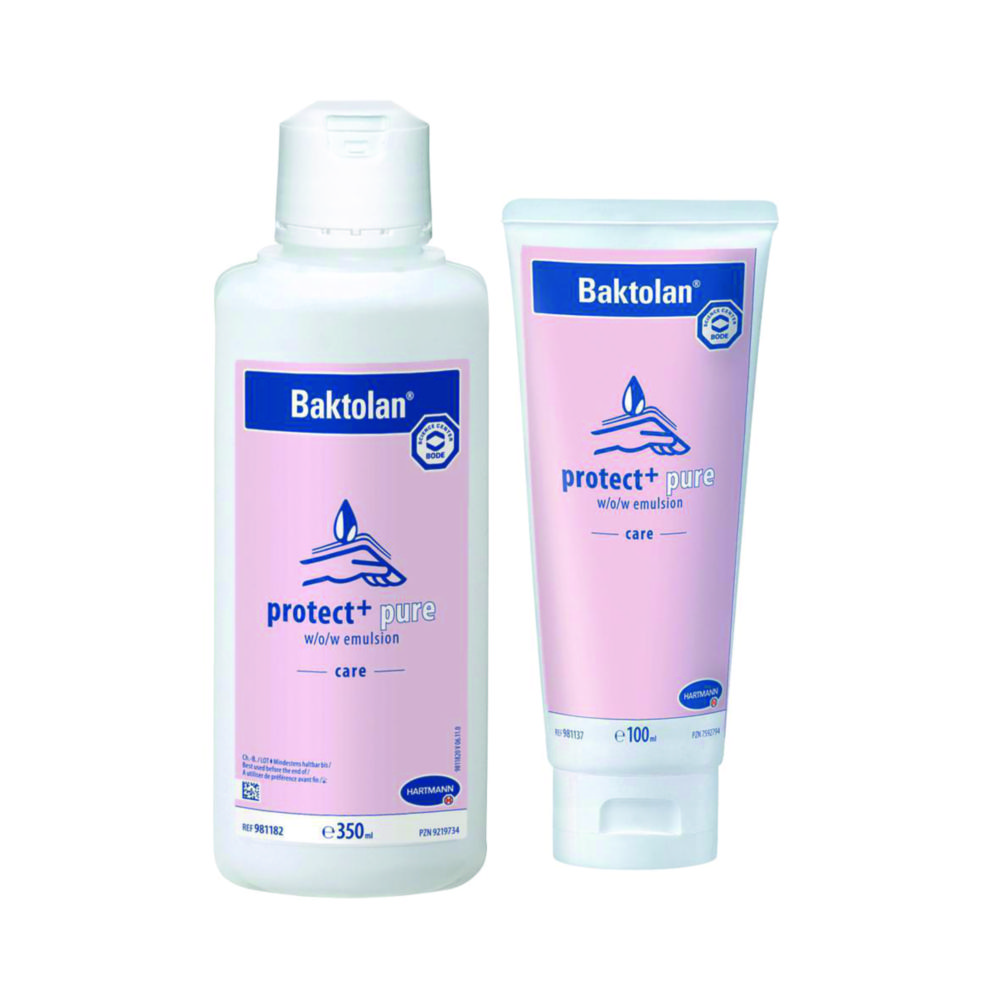
Care Lotion Baktolan®
Capacity ml:
350
|
Type:
Baktolan® vital, Gel
For intensive care of dry and sensitive skin.Active ingredients: allantoin, panthenol and vitamin EFor dry and sensitive skinWithout parabensBaktolan vital is a rub-in hydrogel, which improves blood circulation and has a cooling and invigorating effect. Baktolan vital can be used as a supplement for treatment of poor blood circulation, can relieve tension and support breathing therapy.Baktolan® protect + pure, water-in-oil-in-water (w/o/w) lotion for protection against aqueous solutions and for regenerating care at the same time of dry, highly stressed skin.
€7.04*

B. Braun Deutschland
Care lotion Trixo®-lind
Capacity:
20 ml
|
Type of packaging:
Tube
Effective care for normal and sensitive skin.Coconut oil gives a moisture boost and creates a protective layerOil-in-water emulsionSkin-neutral pH valueGently perfumedSoothes and moisturises the skinDermatologically testedFree of microplastic, silicones and paraffin
€1.82*

B. Braun Deutschland
Care lotion Trixo®-lind pure
Capacity ml:
100
|
Description:
Tube
Effective care for sensitive, dry and stressed skin.With Coconut oilOil-in-water emulsionSkin-neutral pH valueFree of dyes and perfumesSoothes and moisturises the skinDermatologically testedFree of microplastic, silicones and paraffin
From
€5.28*

Ansell Healthcare Europe N.V.
Chemical Protection Glove AlphaTec®87-245, natural latex
AQL:
1.5
|
Colour:
Blue
|
Glove size:
8.5
|
Interior finish:
Velour liner
|
Length:
300 mm
|
Material:
Natural latex
|
Thickness:
0.43 mm
Flexible protection glove with high wearing comfort and good dexterity.With strong protection layer100% cotton flockDiamond grip finish on palm and fingers for good dry gripTear-resistant beaded cuff for easy donningNot suitable for fat-containing foodsAQL 1.5, Cat. III1 pair per pack.According to EN ISO 374-1:2016/Type B, EN ISO 374-5:2016, EN 421, EN 420, EN 388
From
€2.99*

MAPA GmbH
Chemical Protection Glove Alto 405, Neoprene/Latex
Colour:
Yellow/blue
|
Glove size:
7
|
Length:
330 mm
|
Material:
Natural latex
|
Thickness:
0.7 mm
Flexible safety glove made of natural latex and neoprene offering tactile sensitivity and light chemical protection. Anatomical shape. Better grip due to embossed texture. Good dexterity.1 pair per pack.
From
€3.78*

MAPA GmbH
Chemical Protection Glove Butoflex 650
Colour:
Black
|
Glove size:
8
|
Length:
350 mm
|
Thickness:
1.5 mm
The only Butyl glove on the market with an exclusive embossed exterior finish, meaning slippery objects can be handled without risk.Exceptional comfort; the first butyl glove on the market with a fabric inner liningUltimate specific chemical resistance, for very corrosive acids, ketones, esters and amine derivativesUnrivaled flexibility and dexterity1 pair per pack.
From
€116.50*
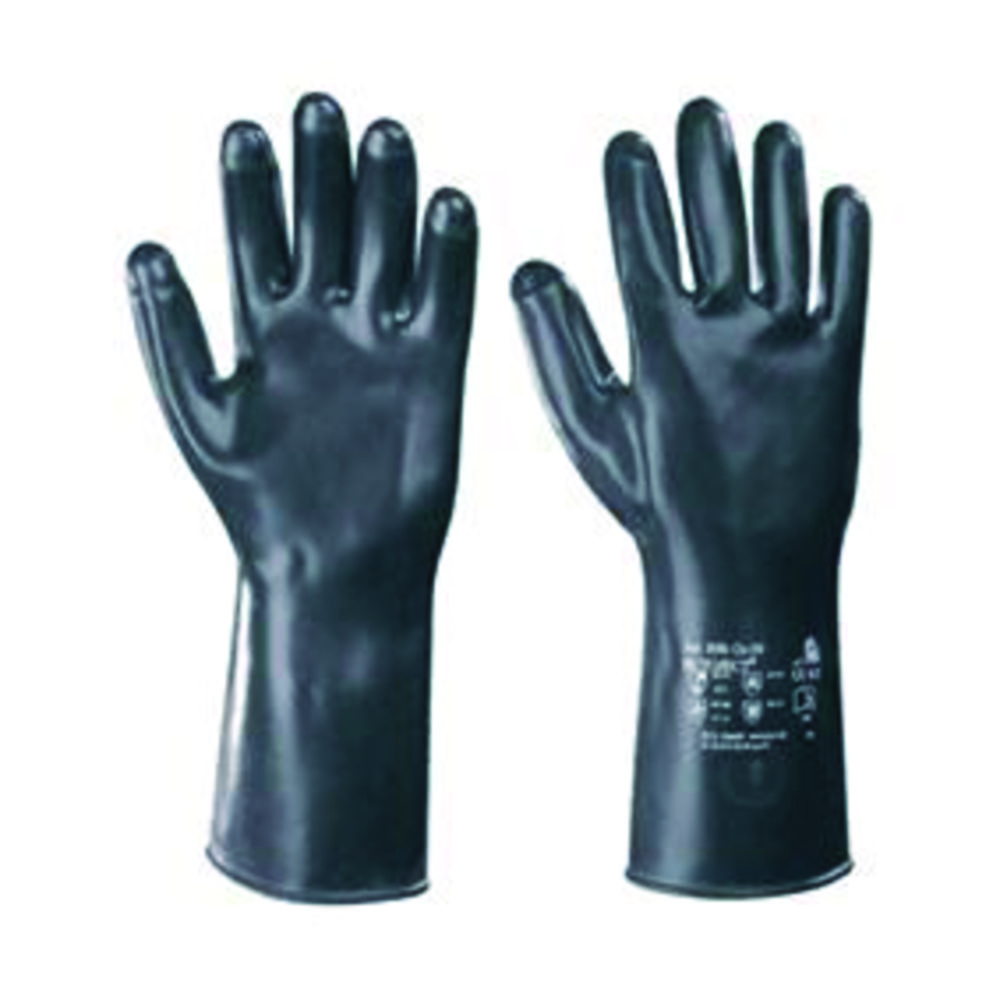
Honeywell Safety Products
Chemical Protection Glove Butoject® 898
Colour:
Black
|
Glove size:
11
|
Length:
350 mm
|
Thickness:
0.7 mm
Butoject® 898 is a highly flexible chemical protective glove made of butyl rubber.Manufactured by injection mouldingWith rolled cuffSmoothPowderedPack of 1 pair
€26.50*
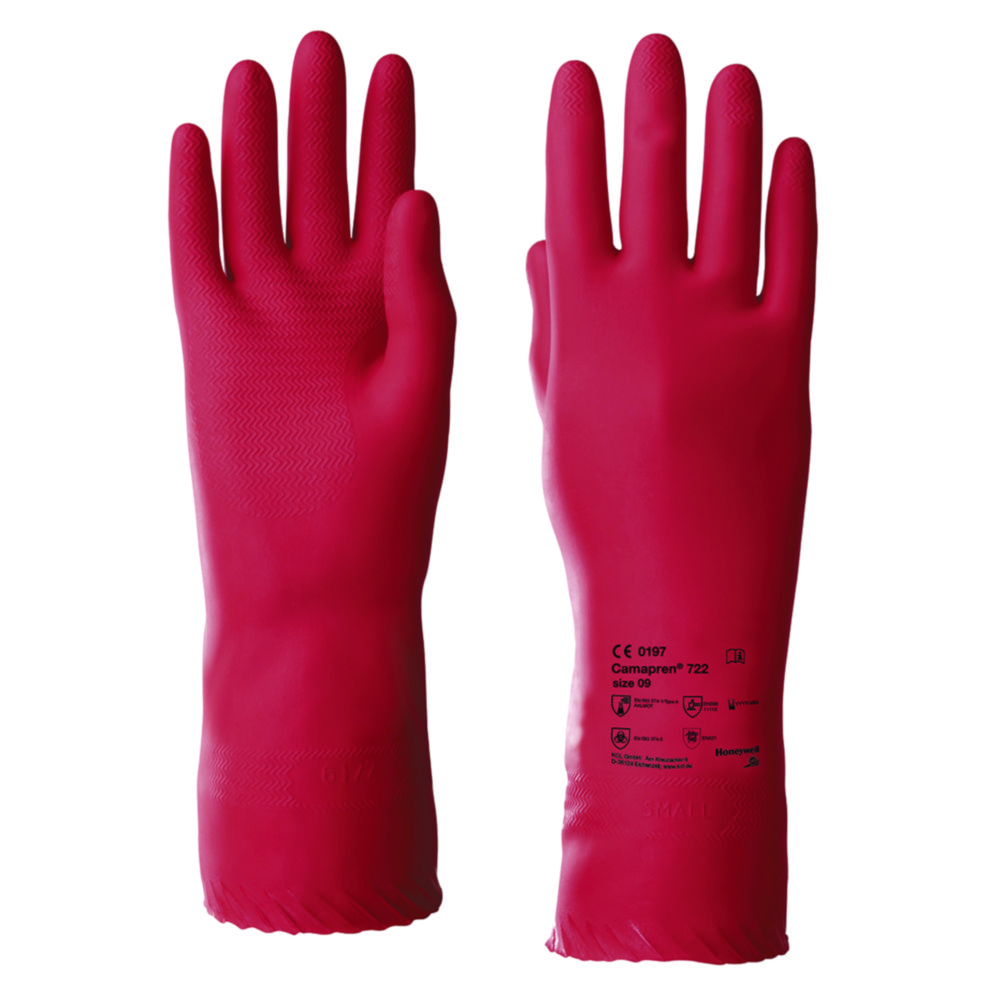
Honeywell Safety Products
Chemical Protection Glove KCL Camapren® 722
AQL:
0.65
|
Ambidextrous:
No
|
Colour:
Red
|
Glove size:
9
|
Interior finish:
Velour liner
|
Length:
300 mm
|
Material:
Chloroprene, natural latex
|
Thickness:
0.6 mm
Chemical protection glove made of chloroprene natural latex.Very good sensitivityGood grip on greasy and oily parts, profiledHigh flexibility at low temperaturesHigh elasticityPleasant wearing comfortWith stretch edgePack of 1 pairAccording to EN ISO 374-1:2016/Type A, EN ISO 374-5:2016, EN 388, EN 420, EN 421.
From
€4.84*
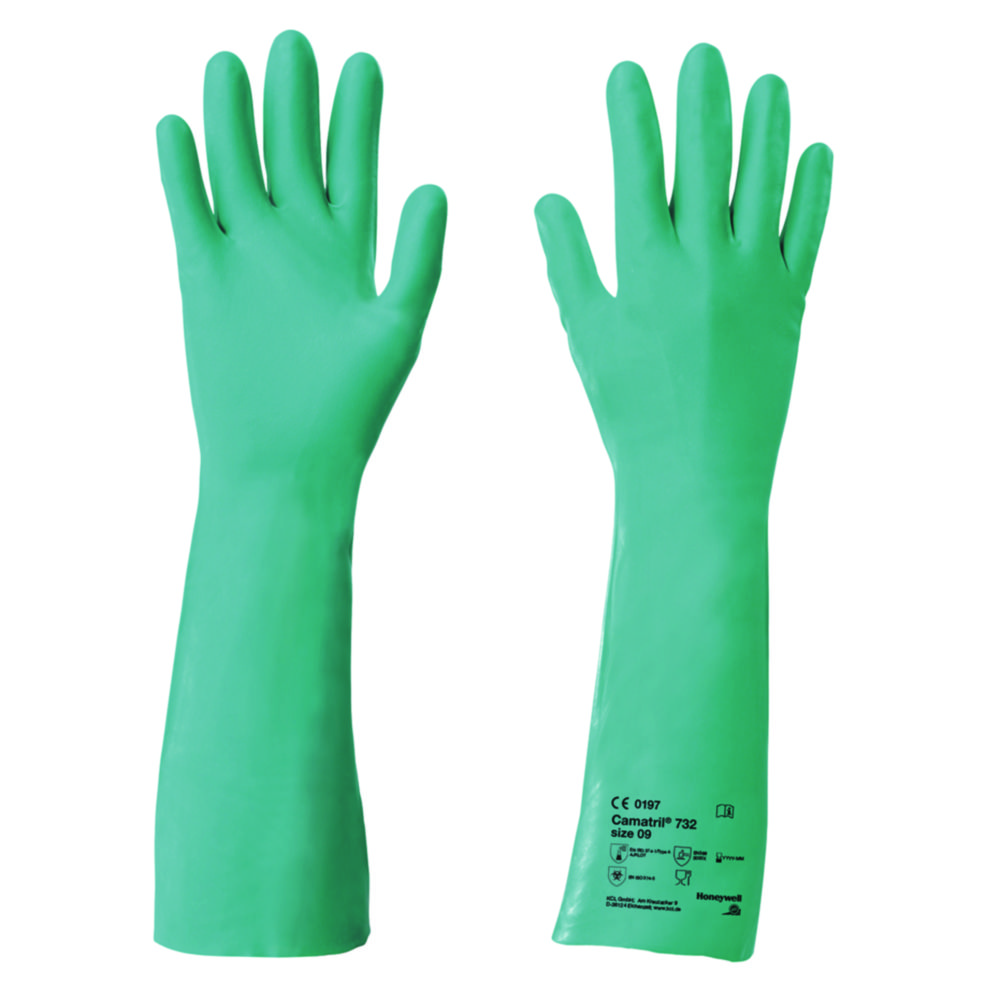
Honeywell Safety Products
Chemical Protection Glove KCL Camatril® 732, Nitril
AQL:
0.65
|
Ambidextrous:
No
|
Colour:
Green
|
Cuff:
Long
|
Food safe:
Yes
|
Glove size:
7
|
Interior finish:
Velour liner
|
Length:
400 mm
|
Material:
Nitrile
|
Thickness:
0.4 mm
High chemical resistanceGood flexibilityGood temperature resistanceAnatomical shapeGood sense of touchInside with cotton velour finishRoughened surfacePack of 1 pairAccording to EN ISO 374-1:2016/Type A, EN 388, EN ISO 374-5:2016, EN 420 Suitable for food handling.
From
€7.04*

Kimberly-Clark GmbH
Chemical Protection Glove KleenGuard® G80, Nitril
AQL:
0.65
|
Colour:
Green
|
Glove size:
7
|
Interior finish:
Velour liner
|
Length:
330 mm
|
Material:
Nitrile
Chemical Protection Glove offering tactile sensitivity and light chemical protection.Latex-freeTextured fingertip, enhances wet and dry gripComfort, due to the quality of the flock-liningAQL 0.65Cat. IIIPacking with 5 x 12 pairsAccording to EN ISO 374-1:2016/Type B, EN ISO 374-5:2016, EN 388
€238.18*

Ansell Healthcare Europe N.V.
Chemical Protection Glove Profil™ Plus, Latex
AQL:
0.65
|
Colour:
Yellow
|
Glove size:
XL (9.5 - 10)
|
Length:
300 mm
|
Material:
Natural latex
|
Thickness:
0.55 mm
Specially designed for chemical processing in wet conditions. 1 pair per pack.Medium weight glove with outstanding grip.Excellent resistance to mechanical hazards and enhanced chemical resistance.100% cotton flocklining. Makes the glove softer and more comfortable to wear. Helps absorb perspiration.Specially treated to reduce the risk of allergy.AQL 0.65 (EN374)
From
€3.83*

MAPA GmbH
Chemical Protection Glove Ultranitril 381, Nitrile
Colour:
Green
|
Glove size:
11
|
Interior finish:
Velour liner
|
Length:
355 mm
|
Material:
Nitrile
|
Thickness:
0.85 mm
Chemical protective glove made of nitrile with glued cotton liner for long term comfort. Anatomic shape. Z-pattern-profile for safe grip of wet things. More dexterity due to the glued cotton knit lining, which offers excellent comfort and thermal insulation. Excellent resistance against oils, greases and many solvents.1 pair per pack.
From
€14.34*

Ansell Healthcare Europe N.V.
Chemical Protection Glove UNIVERSAL™ Plus, Latex
AQL:
0.65
|
Colour:
Yellow
|
Glove size:
L (8.5 - 9)
|
Length:
305 mm
|
Material:
Natural latex
|
Thickness:
0.40 mm
Medium weight glove with outstanding grip.Excellent resistance to mechanical hazards and enhanced chemical resistance.100% cotton flocklining. Makes the glove softer and more comfortable to wear. Helps absorb perspiration.Specially treated to reduce the risk of allergy.AQL 0.651 pair per packAccording to EN ISO 374-1:2016/Type B, EN ISO 374-5:2016, EN 421, EN 388
From
€3.38*

Uvex Arbeitsschutz GmbH
Chemical Protection Glove uvex profapren CF 33, Chloroprene/Latex
Colour:
Dark grey
|
Glove size:
7
|
Length:
330 mm
|
Material:
Chloroprene
|
Thickness:
0.75 mm
High-quality unsupported chloroprene safety glove for protection against a broad spectrum of chemicals. The silicone-free safety glove has excellent properties for protection against chemical and mechanical risks.1 pair per pack.Characteristics:good combination of flexibility and strengthresistant to many chemicals and solventsApplications: chemical industry, metal processing (cleaning), painting/coating, Cat. IIIAccording to EN ISO 374-1:2016/Type A, EN 388
€72.60*

Uvex Arbeitsschutz GmbH
Chemical Protection Glove uvex profastrong NF33, Nitrile
Ambidextrous:
No
|
Colour:
Green
|
Food safe:
Yes
|
Glove size:
8
|
Length:
330 mm
|
Material:
Nitrile
|
Sterile:
No
|
Thickness:
0.38 mm
Nitrile safety gloves, proven in environments involving exposure to acids, grease and solvents.Non-sterile EN 374, 388. Packaging with 12 pairs. Cat. IIICharacteristicsoutstanding abrasion resistancegood grip for wet surfacesanatomic shapegood dexterityApplicationslaboratoriesfood industrychemical industryAccording to EN ISO 374-1:2016/Type A, EN 388, EN 420 Suitable for food handling.
€60.60*

Uvex Arbeitsschutz GmbH
Chemical Protection Glove uvex rubiflex S NB35B, NBR
Ambidextrous:
No
|
Colour:
Blue
|
Food safe:
Yes
|
Glove size:
8
|
Interior finish:
Jersey
|
Length:
350 mm
|
Material:
NBR
|
Thickness:
0.40 mm
The very lightweight chemical safety glove combines protection with outstanding wearer comfort and flexibility. Apart from their comfort properties, supported chemical safety gloves provide good protection against chemical and mechanical risks.Characteristics:anatomic shapehighly flexiblegood mechanical characteristicsgood resistance to many chemicalsextremely lightweightgood water vapour absorption due to the cotton liningoutstanding feelingCat. IIIAccording to EN ISO 374-1:2016/Type A, EN 388, EN 420 Suitable for food handling.
From
€19.70*
Promotion
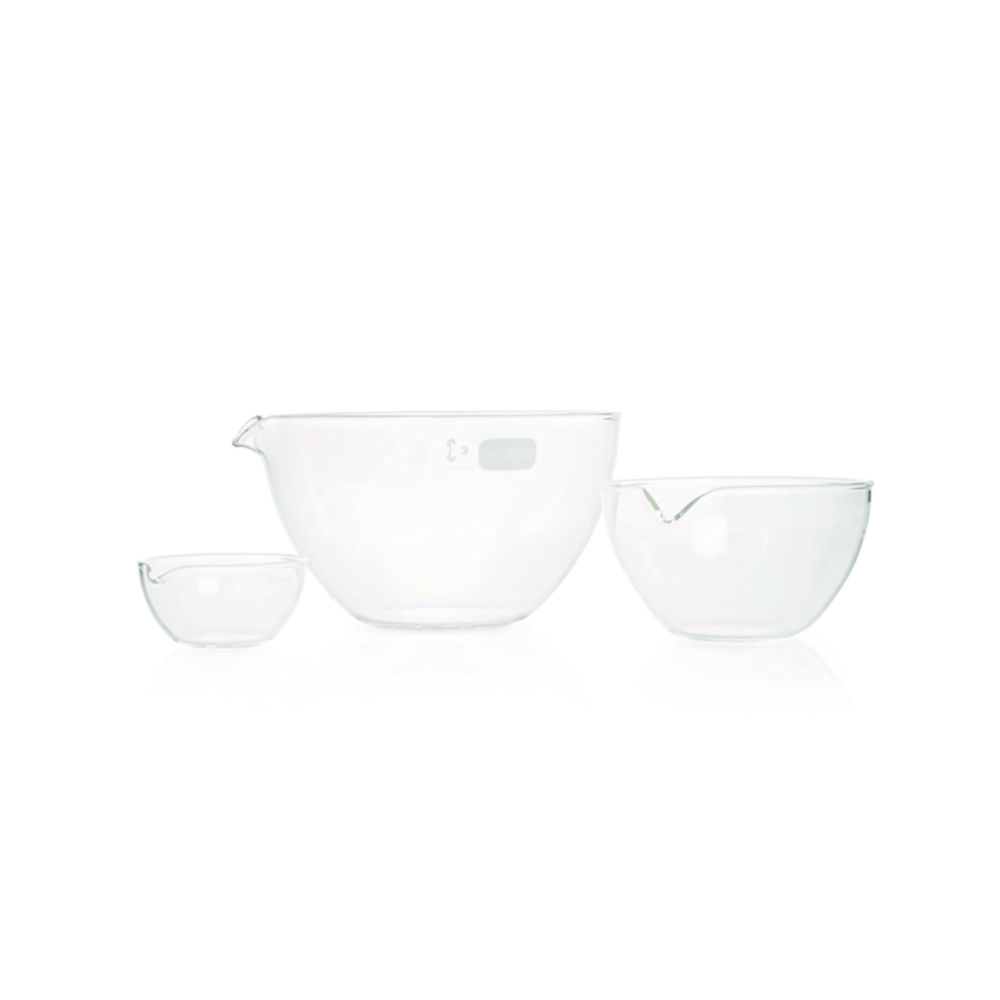
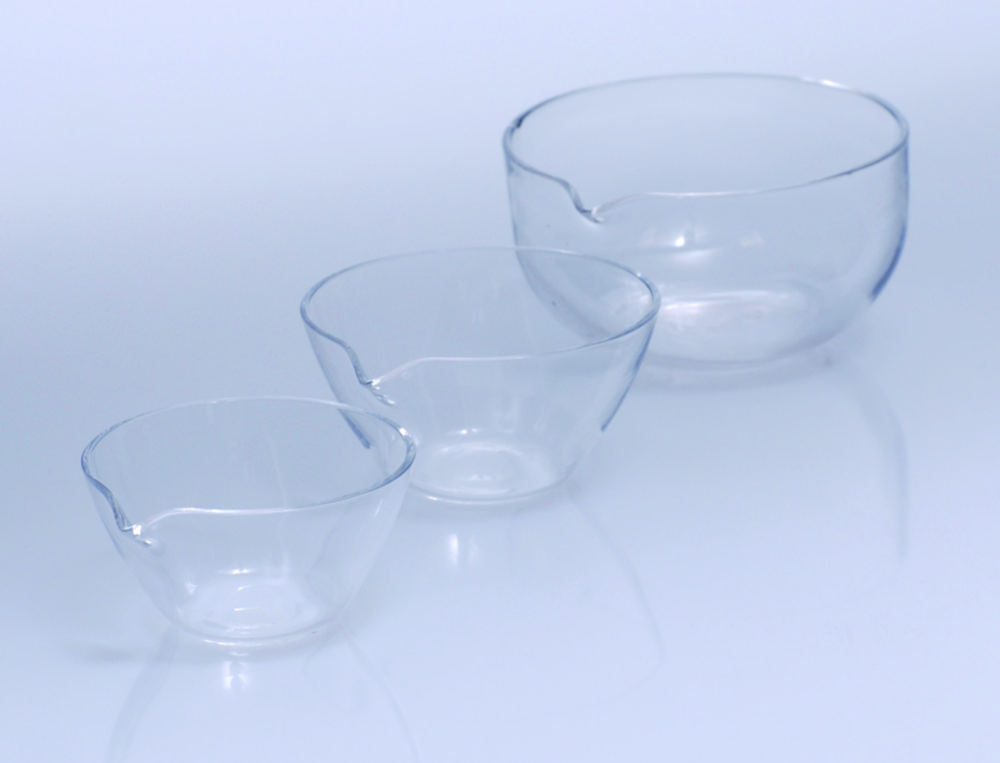
Evaporating basins, porcelain, shallow form
Glazed inside and outside except for rim.*According to DIN standard
€12.32*
Promotion
Evaporating basins, porcelain, shallow form
Glazed inside and outside except for rim.*According to DIN standard
€12.32*