 Quick delivery


LLG Labware
LLG-Filter papers, qualitative, circles, medium fast
Ash content:
0.06 %
|
Dual Use:
0
|
Filtration speed:
0
|
Manufacturer Article Number:
6242631
|
Material:
Cellulose
|
Max. filtration speed:
50 s
|
Particle retention:
8...12 µm
|
Shape (Filters):
Round filters
|
Thickness:
0.18 mm
|
Type of analysis:
Qualtitative
|
UNSPSC:
41104929
|
Weight:
87 g/m²
|
Ø:
240.0 mm
Made from 100 % cellulose. Filtration speed according to DIN 53137. Capacity of separation according to DIN 53135.Pore size 8 to 12 µm or 5 to 13 µm.
€3.54*
42%

LLG Labware
LLG-Filter paper, qualitative, sheets, medium fast
Depth:
570 mm
|
Dimensions (WxD):
460 x 570 mm
|
Filtration speed:
0
|
Manufacturer Article Number:
9045810
|
Material:
Cellulose
|
Max. filtration speed:
35 s
|
Particle retention:
5...13 µm
|
Shape (Filters):
Filter sheets
|
Thickness:
0.16 mm
|
Type of analysis:
Qualtitative
|
UNSPSC:
41104929
|
Weight:
73 g/m²
|
Width:
460 mm
Made from 100 % cellulose. Filtration speed according to DIN 53137. Capacity of separation according to DIN 53135.Pore size 5 to 13 µm.for analytical works in laboratories
€73.68*
€125.80*
(41.43% saved)

ISOLAB Laborgeräte GmbH
Filter flasks, Erlenmeyer shape, borosilicate glass 3.3, with PP olive
Connection:
PP olive
|
Manufacturer Article Number:
040.02.250
|
Material:
Boro 3.3
|
Nominal capacity:
250 ml
|
Shape (Filterflasks):
Erlenmeyer shape
According to ISO 6556 standards. The side arm is suitable to work with 6 mm to 10 mm hose diameters. The Polypropylene side arm has a screw thread connector for easy and safe fitting of the tubing.
€41.10*

Sartorius Lab Instruments
Membrane Filters Microsart™ e.motion, High Flow
Colour:
White
|
Colour grid:
Black
|
Dual Use:
0
|
Manufacturer Article Number:
114H6Z-50----SCM
|
Pore size:
0,45 µm
|
Sterile:
Yes
|
UNSPSC:
41104921
|
Ø:
50 mm
The membrane filters suitable for use in the Microsart™ e.motion are individually sterile-sealed,without protective paper on top of each filter, in a specially designed individual package on a band. For complete traceability, the membrane filter type, diameter, lot number and a unique serial number are printed on the package of each membrane filter unit. Specially developed pore structures of the 0.45 ìm high Flow membrane filters permit faster filtration based on their high flow rates and throughputs.All Microsart membrane filters are "multi-fit" and can be used in all standard dispenser systems.The membrane filters have a diameter of 47 mm or 50 mm, and are white, green or grey with a high-contrast 3.1 mm grid.
€387.00*

Sartorius Lab Instruments
Technical Filter Papers, sheets, creped
Depth:
580 mm
|
Dimensions (WxD):
580 x 580 mm
|
Filtration speed:
0
|
Manufacturer Article Number:
FT-2-483-580580
|
Max. filtration speed:
4 s
|
Type:
39/N
|
UNSPSC:
41104929
|
Weight:
180 g/m²
|
Width:
580 mm
Other dimensions are available on request.
€103.00*

Sartorius Lab Instruments
Membrane filters type 131, hydrophobic edged cellulose nitrate, with 6 mm edge
Colour:
White
|
Colour grid:
Black
|
Manufacturer Article Number:
13106--47----HEN
|
Material:
Cellulose nitrate (CN)
|
Pore size:
0.45 µm
|
Sterile:
Yes
|
Type:
131
|
UNSPSC:
41104921
|
Ø:
47 mm
Cellulose nitrate (cellulose ester) membrane filters, white with black grid, for colony count and sterility testing, individually, sterile packaged / non-sterile.
€211.00*

Sartorius Lab Instruments
Pre-filters, glass microfibre, type 134, binder-free
Binder:
Without
|
Manufacturer Article Number:
13440--47------Q
|
Max. temperature resistance:
500 °C
|
Thickness:
0.44 mm
|
Type:
134
|
UNSPSC:
41-10-49-15
|
Weight:
88 g/m²
|
Ø:
47 mm
Other formats are available on request.
€116.00*
Cytiva Europe GmbH
Glass microfibre filters, grade 934-AH RTU, pre-treated, Volatiles, ignited
Filtration speed:
0
|
Manufacturer Article Number:
4827-035
|
Max. filtration speed:
47 s
|
Particle retention:
1.5 µm
|
Thickness:
0.435 mm
|
Type:
934 AH RTU
|
Weight:
64 g/m²
|
Ø:
35 mm
To be used for solid analysis as well as a wastewater filter for a wide range of water monitorings.Pre-washed, dried or ignited, cooled and weighed Glass Microfibre filters, which eliminate the pre-treating steps that are otherwise required by the US EPA Laboratory Standard Method 2540 parts C, D, and E. These glass microfiber filter papers also have fine particle retention of 1.5 µm at high flow rates to process heavy, turbid samples.Each ready-to-use filter is placed in an individually barcoded aluminum pan that notes the filter weight. Each box contains an additional box ID and barcode that can be used to download the weights of all 100 pans in that box.For volatile substances. Aligned to US EPA Laboratory Standard Method 2540 parts C, D, and E. Pre-washed and pre-fired at 550 °C.
€89.92*
Ahlstrom Falun AB
Quartz-micro Fleece filter MK 360, sheets
Binder:
Without
|
Dual Use:
0
|
Length:
203 mm
|
Manufacturer Article Number:
420007
|
Max. temperature resistance:
900 °C
|
Type:
MK 360
|
UNSPSC:
41-10-49-18
|
Width:
254 mm
Temperature resistance up to max. 900 °CEach batch is checked and certified for trace elementsMade from micro-quartz fibers of extreme purity, binder-freeEspecially good with small amounts of particles
€473.20*

Macherey-Nagel GmbH & Co. KG
Membrane filters PORAFIL®CM
Autoclavable:
Yes
|
Colour:
White
|
Manufacturer Article Number:
65100045013
|
Material:
Mixed cellulose ester (MCE)
|
Max. temperature resistance:
125 °C
|
Pore size:
0.45 µm
|
Sterile:
No
|
UNSPSC:
41104921
|
Ø:
13 mm
Membranes of cellulose mixed esters are ideal for gravimetric analysis. They are particularly suited for aqueous solutions. The hydrophilic membrane is thermally stable to 125 °C and can be autoclaved at 121 °C. This membrane is often used for contamination tests.
€93.30*
Hahnemühle FineArt GmbH
Qualitative Quartz microfibre filters, QFH, sheets
Binder:
Without
|
Length:
254 mm
|
Manufacturer Article Number:
QFH203254
|
Max. temperature resistance:
1000 °C
|
Thickness:
0.45 mm
|
Type:
QFH
|
Weight:
85 g/m²
|
Width:
203 mm
Recommended filters for atmospheric pollution control and for particles determination at high temperatures.Filters made of pure quartz microfibre (SiO2), free of binding elements or additivesExtremely low content in alkali-earth metalsDetermination of suspended particles (SPM and TSP) in ambient air acc. to the directive of the US EPA (Environmental Protection Agency) and the EN 23210Retention: Excellent retention of very fine particles through the adsorption mechanisms of quartz fibresChemical stability: excellent stability with hardly any loss of filter-material due to chemical reactions under extreme conditions with acid gases (HCl, SO2, SO3, H2SO4, NO and NO3)Resistance to chemical reagents: excellent resistance to solvents, acids (except HF) and alkaline substancesStability at high temperatures: higher resistance than glass microfiber, up to 1000 °CWeight: 85 g/m2Thickness: 0.45 mmFurther sizes on request.
€482.70*
Cytiva Europe GmbH
Glass microfibre filters, grade 934-AH RTU, pre-treated, Volatiles
Filtration speed:
0
|
Manufacturer Article Number:
3827-035
|
Max. filtration speed:
47 s
|
Particle retention:
1.5 µm
|
Thickness:
0.435 mm
|
Type:
934 AH RTU
|
Weight:
64 g/m²
|
Ø:
35 mm
To be used for solid analysis as well as a wastewater filter for a wide range of water monitorings.Pre-washed, dried or ignited, cooled and weighed Glass Microfibre filters, which eliminate the pre-treating steps that are otherwise required by the US EPA Laboratory Standard Method 2540 parts C, D, and E. These glass microfiber filter papers also have fine particle retention of 1.5 µm at high flow rates to process heavy, turbid samples.Each ready-to-use filter is placed in an individually barcoded aluminum pan that notes the filter weight. Each box contains an additional box ID and barcode that can be used to download the weights of all 100 pans in that box.For volatile substances. Pre-weighed. Aligned to US EPA Laboratory Standard Method 2540 parts C, D, and E.
€107.30*
Cytiva Europe GmbH
Glass Microfiber Filters with Binder, Grade GF 10, rolls
Binder:
Organic
|
Length:
100 m
|
Manufacturer Article Number:
10370394
|
Material:
Borosilicate
|
Max. temperature resistance:
180 °C
|
Type:
GF 10
|
UNSPSC:
41-10-49-18
|
Weight:
70 g/m²
|
Width:
50 mm
These glass microfiber filters are made from borosilicate glass and strengthened with an organic binder to provide high mechanical stability.Temperature resistance up to 180 °CMedium filtration speedCan be used as a roll filter in automated applications
€91.77*
Cytiva Europe GmbH
Glass microfibre filters, grade 934-AH RTU, pre-treated, Solids, double weigh
Dual Use:
0
|
Filtration speed:
0
|
Manufacturer Article Number:
9927-047
|
Max. filtration speed:
47 s
|
Particle retention:
1.5 µm
|
Thickness:
0.435 mm
|
Type:
934 AH RTU
|
Weight:
64 g/m²
|
Ø:
47 mm
To be used for solid analysis as well as a wastewater filter for a wide range of water monitorings.Pre-washed, dried or ignited, cooled and weighed Glass Microfibre filters, which eliminate the pre-treating steps that are otherwise required by the US EPA Laboratory Standard Method 2540 parts C, D, and E. These glass microfiber filter papers also have fine particle retention of 1.5 µm at high flow rates to process heavy, turbid samples.Each ready-to-use filter is placed in an individually barcoded aluminum pan that notes the filter weight. Each box contains an additional box ID and barcode that can be used to download the weights of all 100 pans in that box.For suspended and dissolved solids. Pre-washed, dried, cooled, and weighed filters with certified mass loss between washing and drying steps of the lesser of less than 0.5 mg or 4% in accordance with US EPA Lab Standard Method 2540 parts C and D.The drying, cooling and weighing steps are repeated twice for highest regulatory concerns.
€185.00*

Cytiva Europe GmbH
Glass microfibre filters, grade GF/B, sheets
Length:
460 mm
|
Manufacturer Article Number:
1821-915
|
Particle retention:
1 µm
|
Type:
GF/B
|
Width:
570 mm
Glass microfibre filters have a fast filtration and a high loading capacity and particle retention rate. Manufactured without chemical binder from high grade borosilicate glass. (Exception: GF6, GF9). They are suitable for gravity or low suction filtration. Filtration speeds generally very much higher than conventional cellulose papers. Efficient retention of micron size particles. Must be used flat. Ideal for use in flat perforated plate Buchner type funnels (not sintered glass models). Can be used up to 500 °C.Three times thicker and with greater wet strength than GF/A. Particle retention to 1µm.
€1,456.00*
Cytiva Europe GmbH
Glass microfibre filters, grade GF/C, sheets
Length:
254 mm
|
Manufacturer Article Number:
1822-866
|
Particle retention:
1.2 µm
|
Type:
GF/C
|
Width:
203 mm
Glass microfibre filters have a fast filtration and a high loading capacity and particle retention rate. Manufactured without chemical binder from high grade borosilicate glass. (Exception: GF6, GF9). They are suitable for gravity or low suction filtration. Filtration speeds generally very much higher than conventional cellulose papers. Efficient retention of micron size particles. Must be used flat. Ideal for use in flat perforated plate Buchner type funnels (not sintered glass models). Can be used up to 500 °C.Extremely efficient filter made to retain fine particles and micro organisms. Particle retention to 1.2 µm.
€149.70*
Cytiva Europe GmbH
Glass microfibre filters, grade GF/F, sheets
Length:
460 mm
|
Manufacturer Article Number:
1825-915
|
Particle retention:
0.7 µm
|
Type:
GF/F
|
Width:
570 mm
Glass microfibre filters have a fast filtration and a high loading capacity and particle retention rate. Manufactured without chemical binder from high grade borosilicate glass. (Exception: GF6, GF9). They are suitable for gravity or low suction filtration. Filtration speeds generally very much higher than conventional cellulose papers. Efficient retention of micron size particles. Must be used flat. Ideal for use in flat perforated plate Buchner type funnels (not sintered glass models). Can be used up to 500 °C.This ultra-fine filter has a 98 % retention efficiency for particles as small as 0.7 µm in liquids. Particle retention to 0.7 µm.
€2,140.00*
Cytiva Europe GmbH
Quartz microfibre filters, grade QM-A, sheets
Length:
254 mm
|
Manufacturer Article Number:
1851-865
|
Max. temperature resistance:
500 °C
|
Type:
QM-A
|
UNSPSC:
40-16-18-03
|
Width:
203 mm
Glass microfibre filters have a fast filtration and a high loading capacity and particle retention rate. Manufactured without chemical binder from high grade borosilicate glass. (Exception: GF6, GF9). They are suitable for gravity or low suction filtration. Filtration speeds generally very much higher than conventional cellulose papers. Efficient retention of micron size particles. Must be used flat. Ideal for use in flat perforated plate Buchner type funnels (not sintered glass models). Can be used up to 500 °C.Manufactured from quartz microfibre to withstand high temperatures. Can be used up to 500 °C.
€452.00*
Hahnemühle FineArt GmbH
Glass fibre filters without binder, sheets
Binder:
Without
|
Filtration speed:
0
|
Length:
254 mm
|
Manufacturer Article Number:
GF50203254
|
Max. filtration speed:
19 s
|
Max. temperature resistance:
500 °C
|
Thickness:
0.29 mm
|
Type:
GF50
|
UNSPSC:
40-16-18-03
|
Weight:
56 g/m²
|
Width:
203 mm
Recommended filters for controlling both air and water pollution.Made of 100 % borosilicate glass fibres without bindersExtremely low content in alkali-earth metalsChemical stability: It keeps all its properties in contact with acid solutions (except hydrofluoric acid) and basic solutions at moderate concentrationsUsable as a pre-filter for membranes to prevent the membranes from silting upDeposition of (radioactive) aerosols and monitoring of nuclear power plantsGravimetrical analysis of organic and inorganic impurities in water and waste water according to DIN 38409 and EN 872 (suspended particles)Measurement of immission, measurement of dust in air and gases, monitoring of the efficiency of filtration and dedusting, monitoring the combustion air of power plants and of the steel and iron industryMeasurement of dust release in workplace and production processes and the purification of compartment airStability at high temperatures: It keeps its properties up to 500 °CHigh flow speed and high permeability to airFiltration time acc. to Gurley
€270.30*
Cytiva Europe GmbH
Glass microfibre filters, grade GF/A, sheets
Length:
460 mm
|
Manufacturer Article Number:
1820-915
|
Material:
Glass fiber (GF)
|
Particle retention:
1.6 µm
|
Type:
GF/ A
|
Width:
570 mm
The general purpose high efficiency glass microfibre filter. Particle retention to 1.6 µm.
€398.00*

ETL
PMM-Membran-Einsatz / Typ 273-M
Ein Satz, bestehend aus jeweils 2 Stücken, ist doppelseitig und betriebsfertig. Dieser Satz kann bei Wartungsarbeiten selbst getauscht werden.
€365.00*


ETL
Platten-Membran-Modul Typ PME, 6mm
Gemäß der Zeichnung 2401-741 sind zwei Stück doppelseitige Membranen vom Typ 440-M vorgesehen, mit einer Membranfläche von etwa 1.200 cm². Die Gehäuse bestehen aus PVC und verfügen über einen einfach lösbaren 90°-Steckverbinder für die vorhandene Permeatleitung mit einem Außendurchmesser von 6 mm. Die maximale Betriebstemperatur beträgt 45°C, und ein Reinigungspinsel ist im Lieferumfang enthalten.
€538.00*
Promotion


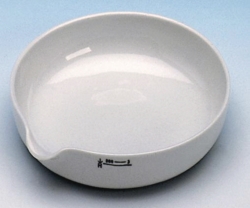
Evaporating basins, porcelain, shallow form
Glazed inside and outside except for rim.*According to DIN standard
€12.32*
Promotion
Evaporating basins, porcelain, shallow form
Glazed inside and outside except for rim.*According to DIN standard
€12.32*