 Quick delivery

42%

LLG Labware
LLG-Cuvette rack, PP
Dual Use:
0
|
Height mm:
35
|
Length mm:
210
|
Manufacturer Article Number:
4682061
|
Width mm:
70
Ideal for storing up to 16 cuvettes with 10 mm width. Two-tier arrangement of the cuvette rows ensures clarity.Numbered positionsAutoclavable at 121 °C
€7.62*
€13.07*
(41.7% saved)
37%

LLG Labware
LLG-Cuvettes
Description:
with PTFE Lid
|
Dual Use:
0
|
Manufacturer Article Number:
4681513
|
Path length mm:
10
|
Type:
quartz-glass
|
Volume ml:
3.5
LLG-Cuvettes are most frequently used in analytical laboratories.They have two clear windows, two side walls and are available as optical glass or quartz variants. The walls and the base are polished inside and frosted outside. The thickness of the windows and the base is 1.25 mm. The overall height of standard type cells is 45 mm or 48 mm for those fitted with a stopper. Each cuvette is supplied with a PTFE lid.Optical Glass: 335 to 2500 nmQuartz: 200 to 2700 nm
€29.46*
€94.50*
(36.92% saved)

LLG Labware
LLG-Disposable plastic cells, PS
Description:
Macro
|
Dual Use:
0
|
Manufacturer Article Number:
9406011
|
Material:
PS
|
Operating range nm:
340 to 900
|
Path length mm:
10
|
Volume ml:
4.0
The shape and narrow wall thickness of the cuvettes enable an excellent heat transfer resulting in constant sample temperatures during photometric measurements.Cavity sortedGlass clear polystyrene (PS)Applicable wavelength range 340 nm to 900 nmVery low variation of extinction valuesExcellent optical transmission rangePath length 10 mmOverall dimensions 12.5 mm x 12.5 mm x 45 mmStyrofoam racks: 100 cuvettes in a styrofoam box with cover
From
€5.90*

Starna Scientific Ltd.
Standard Rectangular Cells
Description:
with cover
|
Dual Use:
0
|
External dimensions (W x D x H) mm:
12.5 x 12.5 x 45
|
Internal width mm:
10
|
Manufacturer Article Number:
1/G/10
|
Path length mm:
10
|
Type:
1/G/10
|
Volume ml:
3.500
High precision standard cells for routine analysis. Suitable for most spectral photometers, using rectangular cells. Available with cover or with stopper for a liquid-tight seal. Cover and stopper made of PTFE.Glass typesType G: Optical glass, 334 to 2500 nmType SOG: Special optical glass, 320 to 2500 nmType Q: Spectrosil® Far UV Quartz glass, 190 to 2700 nmSpecificationsWindows parallel to: 3 arcminWindow polish:60/40 scratch/digWindow thickness:1.25 mmWindow flatness to: 4 Newton fringes
€37.00*

BRAND GMBH + CO.KG
Cap for UV micro cuvette
Colour:
Blue
|
Manufacturer Article Number:
759240
|
Material:
PE
From
€14.11*

Hellma GmbH & Co. KG
Macro cells for absorption measurement, UV-range, quartz glass High Performance
Capacity µl:
3500
|
External dimensions (W x D x H) mm:
12.5 x 12.5 x 46
|
Manufacturer Article Number:
110-10-K-40
|
Path length mm:
10 (spectrally measured)
|
Type:
D
|
UNSPSC:
41-12-18-13
Quartz glass High Performance 200 - 2500 nm. Inside width 9.5 mm. Base thickness 1.5 mm.Type A: with PTFE lidType B: with small glass lidType C: with regular glass lidType D: with PTFE stopper / from 40 mm with 2 PTFE stoppers
From
€96.10*

Hellma GmbH & Co. KG
Cells for Absorption Measurement, Flow-Through Measurement, UV-range
Capacity µl:
450
|
Centre height mm:
15.0
|
Description:
Supply and outlet tubes
|
External dimensions (W x D x H) mm:
12.5 x 12.5 x 45
|
Internal width mm:
11 x 4
|
Manufacturer Article Number:
176-15-10-40
|
Material:
QS
|
Path length mm:
10
|
Type:
semi-micro
|
UNSPSC:
41-12-18-13
Optical material: QS: Quartz glass High Performance, wavelength range: 200 - 2500 nm.OS: Special Optical Glass, wavelength range: 320 - 2500 nm.* M 6 x 1 and FEP tubes (outside diameter 1.9mm, inner diameter 1.1mm, length 500mm)
€321.00*

BRAND GMBH + CO.KG
UV plastic cuvettes, semi-micro
Capacity:
1.5 ... 3.0 ml
|
Dual Use:
0
|
Manufacturer Article Number:
759150
|
Max. capacity:
3.0 ml
|
Min. capacity:
1.5 ml
|
Operating range nm:
230 ... 900
|
Path length mm:
10.0
For determinations in water analysis, chemistry and in life science applications.Usable with most polar solvents, acids and alkaline solutionsDrastically reduced risk of contamination Grouped by mold cavity number
From
€35.10*

Hellma GmbH & Co. KG
Secondary standards for calibrating spectrophotometers
Description:
Reference filter UV9, n-hexane
|
Manufacturer Article Number:
667009
|
Type:
667-UV9
|
UNSPSC:
41-11-56-04
|
Wavelength nm:
-
To maintain constant good measurement results, a regular review of the accuracy of the spectrophotometer is required. With the use of certified reference materials from Hellma Analytics, you make sure that your equipment qualifications meet the requirements of the pharmacopoeias and fulfill your internal quality requirements, at the same time you reach the international comparability of your measurement results. The certified reference materials (calibration standards) of the DIN EN ISO 17025 accredited Hellma Analytics calibration laboratory are traceable to the primary standards of NIST (National Institute of Standards and Technology) and meet the requirements of the major pharmacopoeias (e.g. EP, DAB, USP).Your benefits: High quality of the measurement resultsInternational comparability of measurement resultsMeeting the requirements of the major pharmacopoeias (EP, DAB, USP)Results traceable to NIST primary standards30 years warranty on the reference materialsScope of delivery: Certified reference materials (Calibration Standards) in quality storage boxDAkkS Calibration Certificate (DIN 17025)Handling guidelinesCheck for spectral resolutionTo maintain constant good measurement results, a regular review of the accuracy of the spectrophotometer is required. With the use of certified reference materials from Hellma Analytics, you make sure that your equipment qualifications meet the requirements of the pharmacopoeias and fulfill your internal quality requirements, at the same time you reach the international comparability of your measurement results. The certified reference materials (calibration standards) of the DIN EN ISO 17025 accredited Hellma Analytics calibration laboratory are traceable to the primary standards of NIST (National Institute of Standards and Technology) and meet the requirements of the major pharmacopoeias (e.g. EP, DAB, USP).Your benefits: High quality of the measurement resultsInternational comparability of measurement resultsMeeting the requirements of the major pharmacopoeias (EP, DAB, USP)Results traceable to NIST primary standards30 years warranty on the reference materialsScope of delivery: Certified reference materials (Calibration Standards) in quality storage boxDAkkS Calibration Certificate (DIN 17025)Handling guidelinesCheck for spectral resolutionHazardous Substance DataSDSLink
€471.00*
Hellma GmbH & Co. KG
Secondary standards for calibrating spectrophotometers
Description:
Liquid filter UV25, Didymium in Perchloric acid
|
Dual Use:
0
|
Manufacturer Article Number:
667025
|
Type:
667-UV25EPUSP
|
Wavelength nm:
329 - 864
To maintain constant good measurement results, a regular review of the accuracy of the spectrophotometer is required. With the use of certified reference materials from Hellma Analytics, you make sure that your equipment qualifications meet the requirements of the pharmacopoeias and fulfill your internal quality requirements, at the same time you reach the international comparability of your measurement results. The certified reference materials (calibration standards) of the DIN EN ISO 17025 accredited Hellma Analytics calibration laboratory are traceable to the primary standards of NIST (National Institute of Standards and Technology) and meet the requirements of the major pharmacopoeias (e.g. EP, DAB, USP).Your benefits: High quality of the measurement resultsInternational comparability of measurement resultsMeeting the requirements of the major pharmacopoeias (EP, DAB, USP)Results traceable to NIST primary standards30 years warranty on the reference materialsScope of delivery: Certified reference materials (Calibration Standards) in quality storage boxDAkkS Calibration Certificate (DIN 17025)Handling guidelinesCheck the wavelength accuracy
€410.00*

Hellma GmbH & Co. KG
Flow-through cells with two optical paths lengths, Absorption and Fluorescence Measurement
Capacity µl:
220
|
Centre height mm:
15.0
|
External dimensions (W x D x H) mm:
35 x 12,5 x 12,5
|
Manufacturer Article Number:
176-766-15-40
|
Path length mm:
2 x 10
|
Type:
semi-micro*
|
internal width (mm) / aperture (mm x mm/Ø):
11 x 6/11 x 2
Wavelength Range: 200nm - 2500nmOptical material: Quartz glass High Performance* For fluorescence measurement
€873.00*

Hellma GmbH & Co. KG
Macro cells for absorption measurement, NIR-range, quartz glass Extended Range
Capacity µl:
3500
|
External dimensions (W x D x H) mm:
46 x 12.5 x 12.5
|
Manufacturer Article Number:
110-10-46
|
Path length mm:
10
|
Type:
D
|
UNSPSC:
41-12-18-13
Quartz glass Extended Range, Wavelength range: 200 - 3500 nm. Inside width 9.5 mm. Base thickness 1.5 mm.Type A: with PTFE lid Type B: with small glass lidType D: with PTFE stopper / from 40 mm with 2 PTFE stoppers
€137.00*

Hellma GmbH & Co. KG
Cells for Fluorescence Measurement, UV-range
Centre height mm:
15.0
|
Description:
PE stopper, 3 window
|
Dual Use:
0
|
External dimensions (W x D x H) mm:
12.5 x 12.5 x 45
|
Manufacturer Article Number:
105-250-15-40
|
Path length mm:
10 x 2
|
Type:
ultramicro
|
UNSPSC:
41-12-18-13
|
internal width (mm) / aperture (mm x mm/Ø):
5 x 2
Wavelength Range: 200 nm - 2500 nmOptical material: Quartz glass High Performance
€170.00*

Hellma GmbH & Co. KG
Cylindrical Cells for polarimetric measurements, UV-range
Capacity µl:
2800
|
Description:
PTFE stopper
|
External dimensions (T x Ø) mm:
12,5 x 22
|
Internal width mm:
19
|
Manufacturer Article Number:
120-10-40
|
Path length mm:
10
|
Type:
macro
|
UNSPSC:
41-12-18-13
Wavelength: 200nm - 2500nmOptical material: Quartz glass High Performance
€148.00*

Kartell S.p.A.
Accessories for standard and semi-micro cuvettes
Description:
Disposable stirrer
|
Diam.:
3
|
Length mm:
90
|
Manufacturer Article Number:
0093900
|
Material:
PS
From
€5.94*

Starna Scientific Ltd.
Standard rectangular fluorometer cells
Description:
with cover
|
Dual Use:
0
|
External dimensions (W x D x H) mm:
12.5 x 12.5 x 45
|
Internal dimensions (W x D x H) mm:
10
|
Manufacturer Article Number:
3/Q/10
|
Path length mm:
10
|
Type:
3/Q/10
|
Volume ml:
3.500
High precision standard cells for routine analysis. Suitable for most spectral photometers, using rectangular cells. Available with cover or with stopper for a liquid-tight seal. Cover and stopper made of PTFE.Glass typesType G: Optical glass, 334 to 2500 nmType SOG: Special optical glass, 320 to 2500 nmType Q: Spectrosil® Far UV Quartz glass, 190 to 2700 nmSpecificationsWindows parallel to: 3 arcminWindow polish:60/40 scratch/digWindow thickness:1.25 mmWindow flatness to: 4 Newton fringes
€151.40*

BRAND GMBH + CO.KG
UV plastic cuvettes, macro
Capacity:
2.5 ... 4.5 ml
|
Manufacturer Article Number:
759170
|
Max. capacity:
4.5 ml
|
Min. capacity:
2.5 ml
|
Operating range nm:
230 ... 900
|
Path length mm:
10.0
For determinations in water analysis, chemistry and in life science applications.Usable with most polar solvents, acids and alkaline solutionsDrastically reduced risk of contamination Grouped by mold cavity number
From
€31.80*

Hellma GmbH & Co. KG
Cells for reflection measurements, Vis-range
Capacity µl:
73000
|
External dimensions (H x Ø) mm:
40.5 x 60
|
Internal dimensions (H x Ø) mm:
39 x 55.6
|
Manufacturer Article Number:
692-104-23
|
UNSPSC:
41-12-18-13
|
optical material:
OG
Wavelength range:Optical material:330nm - 2500nmBorofloat® (BF)360nm - 2500nmOptical glass (OG)
€47.60*
Hellma GmbH & Co. KG
Cells for Absorption Measurement, UV-range
Capacity µl:
1400
|
Description:
Screw cap **
|
External dimensions (W x D x H) mm:
12.5 x 12.5 x 56
|
Manufacturer Article Number:
117-104-10-40
|
Path length mm:
10
|
Type:
semi-micro
|
UNSPSC:
41-12-18-13
|
internal width (mm) / aperture (mm x mm/Ø):
4
To maintain constant good measurement results, a regular review of the accuracy of the spectrophotometer is required. With the use of certified reference materials from Hellma Analytics, you make sure that your equipment qualifications meet the requirements of the pharmacopoeias and fulfill your internal quality requirements, at the same time you reach the international comparability of your measurement results. The certified reference materials (calibration standards) of the DIN EN ISO 17025 accredited Hellma Analytics calibration laboratory are traceable to the primary standards of NIST (National Institute of Standards and Technology) and meet the requirements of the major pharmacopoeias (e.g. EP, DAB, USP).Your benefits: High quality of the measurement resultsInternational comparability of measurement resultsMeeting the requirements of the major pharmacopoeias (EP, DAB, USP)Results traceable to NIST primary standards30 years warranty on the reference materialsScope of delivery: Certified reference materials (Calibration Standards) in quality storage boxDAkkS Calibration Certificate (DIN 17025)Handling guidelinesWavelength Range: 200nm - 2500 nm. Optical material: Quartz glass High PerformanceM= Measuring volume* black side walls and base** with silicone rubber seal and with ISO thread GL 14*** for magnetic stirring bars
€134.00*

Hellma GmbH & Co. KG
Ultra micro cells for absorption measurement, UV-range, quartz glass High Performance
Aperture mm:
Ø 0.8
|
Capacity µl:
5
|
Centre height mm:
15
|
External dimensions (W x D x H) mm:
12.5 x 12.5 x 40
|
Manufacturer Article Number:
1052101015-40
|
Path length mm:
10
|
Type:
B
Quartz glass High Performance 200 - 2500 nm.Type A: with PE stopperType B: open pipette tips
€376.00*

Hellma GmbH & Co. KG
Optical parts for UV and NIR-range
Description:
Quartz glass High Perfomance
|
Manufacturer Article Number:
202-40
|
Outer diam. mm:
22
|
Thickness mm:
1.25
|
UNSPSC:
41-11-57-06
€36.20*

BRAND GMBH + CO.KG
Macro and semi micro cuvettes
Description:
Macro, 4 optical windows
|
Manufacturer Article Number:
759125
|
Material:
UV-transparent
|
Operating range nm:
230 to 900
|
Path length mm:
10
|
Volume ml:
2.5 to 4.5
Sorted by mould cavity number. CERTIFIED LIFE SCIENCE QUALITY.Quality characteristics:Minimal extinction value variation.Optically perfect transmission rangeRecessed window, to protect against scratchesArrow head marking shows the direction of transmission.Advantages to user:Ideal for kinetics measurements1000 cells from the same cavity in each packPractical packaging: clear, re-closable.Polymethylmethacrylate (PMMA) cuvettesTypical operating range: from 300nm to 900nm.Standard deviation at 320nm ± 0.004 extinction units.Polystyrene (PS) cuvettesTypical operative range: from 340nm to 900nm.Standard deviation at 360nm ≤ ± 0.005 extinction units.Macro cell with 4 optical windows, PS / UV-transparentParticularly suitable for fluorescence spectroscopy. The UV version can be used from a wavelength of 230 nm and shows minimal autofluorescence. Standard deviation: Cuvettes of Polystyrene (PS) at 360 nm ≤ ± 0.005 extinction units, cuvettes UV-transparent at 240 nm ≤ ± 0,007 extinction units and at 300 nm ≤ ± 0,005 extinction units.Dimensions:12.5mm x 12.5mm x 45mmWindow:Macro cell 10mm x 35mm
Semi micro cell 4.5mm x 23mm
€12.90*

Hellma GmbH & Co. KG
Cells for Absorption Measurement, Vis-range
Capacity µl:
88000
|
Description:
Large cuvette, glass lid
|
External dimensions (W x D x H) mm:
55 x 55 x 52.5
|
Internal width mm:
50
|
Manufacturer Article Number:
704-003-50-10
|
Path length mm:
50 ± 0.2
|
Type:
large cuvette
|
UNSPSC:
41-12-18-13
|
optical material:
OG
Wavelength Range:Optical material:260nm - 2500nmHOQ 310H (UV)320 nm - 2500 nm Special optical glass (OS)360 nm - 2500 nm Optical glass (OG)
€46.20*

Hellma GmbH & Co. KG
Cells for light scattering measurements, UV-range
Capacity µl:
2800
|
Description:
PTFE-stopper, outer cylinder fire-polished
|
External dimensions (H x Ø) mm:
75 x 10
|
Internal dimensions (H x Ø) mm:
74 x 8
|
Manufacturer Article Number:
540-111-80
|
UNSPSC:
41-12-18-13
Wavelength: 200nm - 2500nmOptical material: Quartz glass High Performance
€126.00*
Promotion


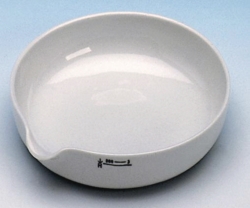
Evaporating basins, porcelain, shallow form
Glazed inside and outside except for rim.*According to DIN standard
€12.32*
Promotion
Evaporating basins, porcelain, shallow form
Glazed inside and outside except for rim.*According to DIN standard
€12.32*